Prime vs Zoom Lenses: Which Should You Actually Buy First?
As an Amazon Associate we earn from qualifying purchases. Some links in this guide are affiliate links — see our affiliate disclosure for details.
Short answer: Should you buy a prime lens or a zoom lens?
The guide questions the common advice to simply buy a prime. It describes a buying mistake that cost two lens purchases and then gives the order in which to buy lenses.
Every guide to this question reaches the same conclusion: primes are sharper, faster and better, so buy a prime.
Three lenses to arrive at the obvious one. So this article is the honest version, including the part where the standard advice is backwards for most people.
The actual difference
A prime has one fixed focal length — 35mm, 50mm, 85mm. A zoom covers a range — 24–70mm, 70–200mm.
That's it. Everything else people say about them follows from that one mechanical fact, and some of it is out of date.
What primes genuinely win at
Aperture for the money. This is the real advantage and it's large. A 50mm f/1.8 costs less than most kit zooms and gathers about four times the light of an f/3.5 zoom. There is no zoom at any price that gives you f/1.8.
Weight for that aperture. A 50mm f/1.8 weighs under 200 grams. A professional f/2.8 zoom is closer to a kilo — five times the weight for one stop less light.
Low light and shallow depth of field. Both follow from the aperture. If you shoot indoors, at dusk, or want backgrounds to genuinely fall away, a fast prime does something no zoom can.
They teach you. This one is real but easy to overstate. Shooting one focal length for a month does make you see in that framing, and that's worth something. It's also not a reason to make your only lens a prime.
What zooms genuinely win at
Zoom-with-your-feet works on a street. It doesn't work across a river, at a wedding where you can't walk into the aisle, over a fence at a sports ground, or standing on a path you're not allowed to leave.
Changing lenses costs seconds and misses moments, and swapping in dust or rain is its own risk.
Moments don't wait. If the thing you're photographing is happening now, a slightly slower lens that's already at the right framing beats a faster one that isn't.
The myth worth killing: "primes are sharper"
This was straightforwardly true fifteen years ago. It is much less true now.
A modern professional f/2.8 zoom is optically excellent across its range — good enough that on a normal-sized print or a screen you would not identify which lens took which picture. The remaining gap between a good zoom and a good prime is mostly aperture and price, not sharpness.
Where sharpness still separates them is at the budget end. A cheap prime will beat a cheap zoom, because the prime has a far simpler optical problem to solve for the same money. If your budget is tight, that's a genuine argument for a prime — but it's an argument about price, not about primes.
What each actually costs you
| 50mm f/1.8 prime | 24–70mm f/2.8 zoom | 24–120mm f/4 zoom | |
|---|---|---|---|
| Light gathered | Most — about 2⅓ stops over f/4 | One stop over f/4 | Baseline |
| Weight | Under 200g | Around 1kg | Around 700g |
| Price | Cheapest by far | Most expensive | Middle |
| Framing flexibility | None | Moderate | Most |
| What I did with it | Stopped carrying it | Stopped carrying it | Still on the camera |
Buy a zoom first. Then buy a prime at the focal length you keep landing on.
That's the reverse of the usual advice, and here's why it's right: you don't yet know which focal length you shoot. Buying a 50mm prime as a first upgrade is buying a guess.
So use a zoom for a month or two, then look at the metadata on the pictures you kept. Most editing software will show you focal length; Lightroom will chart it for you. If two thirds of your keepers are at 35mm, buy a 35mm prime and you'll love it. If they're spread across the range, you already have the right lens and should spend the money on something else.
The exception: telephoto
Everything above applies to normal and wide focal lengths. At the long end the calculus inverts, and it's worth knowing why.
So, which one?
| Your situation | Buy |
|---|---|
| First upgrade from a kit lens | A standard zoom — f/4 constant if you can |
| You know your focal length | A prime at that focal length |
| Portraits, specifically | An 85mm prime |
| Travel, one lens | A zoom, every time |
| Indoor events, low light | A fast prime, or an f/2.8 zoom if you can afford it |
| Budget is the constraint | A prime — you get far more lens for the money |
| Wildlife or sport | A telephoto prime, or accept a slow zoom |
Frequently asked questions
Is a prime lens better than a zoom? For light-gathering and price-per-quality, yes. For flexibility, no. Modern professional zooms have closed most of the sharpness gap, so the real trade is aperture and weight against framing range.
Should a beginner buy a prime or a zoom? A zoom, so you find out which focal lengths you actually use. Then buy a prime at the one you keep coming back to. Buying a prime first is buying a guess.
Are primes really sharper than zooms? At the budget end, yes — a cheap prime beats a cheap zoom easily. At the professional end the difference is small enough that you would not pick them apart in a print.
Why are prime lenses cheaper? Because they solve a far simpler optical problem. A zoom has to stay sharp across its whole range, which needs more elements, more precision and more compromises.
What does "zoom with your feet" mean, and is it good advice? It means walking closer or further instead of zooming. It works for street and casual shooting, and fails whenever you physically can't move — across water, at an event, behind a barrier.
How do I find out which focal length I use most? Look at the metadata of the pictures you kept, not the ones you took. Lightroom and most RAW editors can chart focal length across a folder.
Where to go next
If you've decided on a zoom, the buying guides cover each system — walk-around zooms for Nikon, zoom lenses for Canon full frame and zooms for Sony E-mount.
If you've decided on a prime, start with the best focal length for portraits to narrow it down, then 85mm lenses for Canon, Fujifilm primes or primes for the Sony a6000.
Written by
Marien CartelProfessional and Certified Digital Photographer born in the USA, with 22 years of experience in the field of photography.
Related Guides
Which Camera Shooting Mode Should You Use? Auto, P, A, S and M Explained
Auto, Program, Aperture Priority, Shutter Priority and Manual: what each mode controls, what you still set yourself, and how to choose one for a shot.
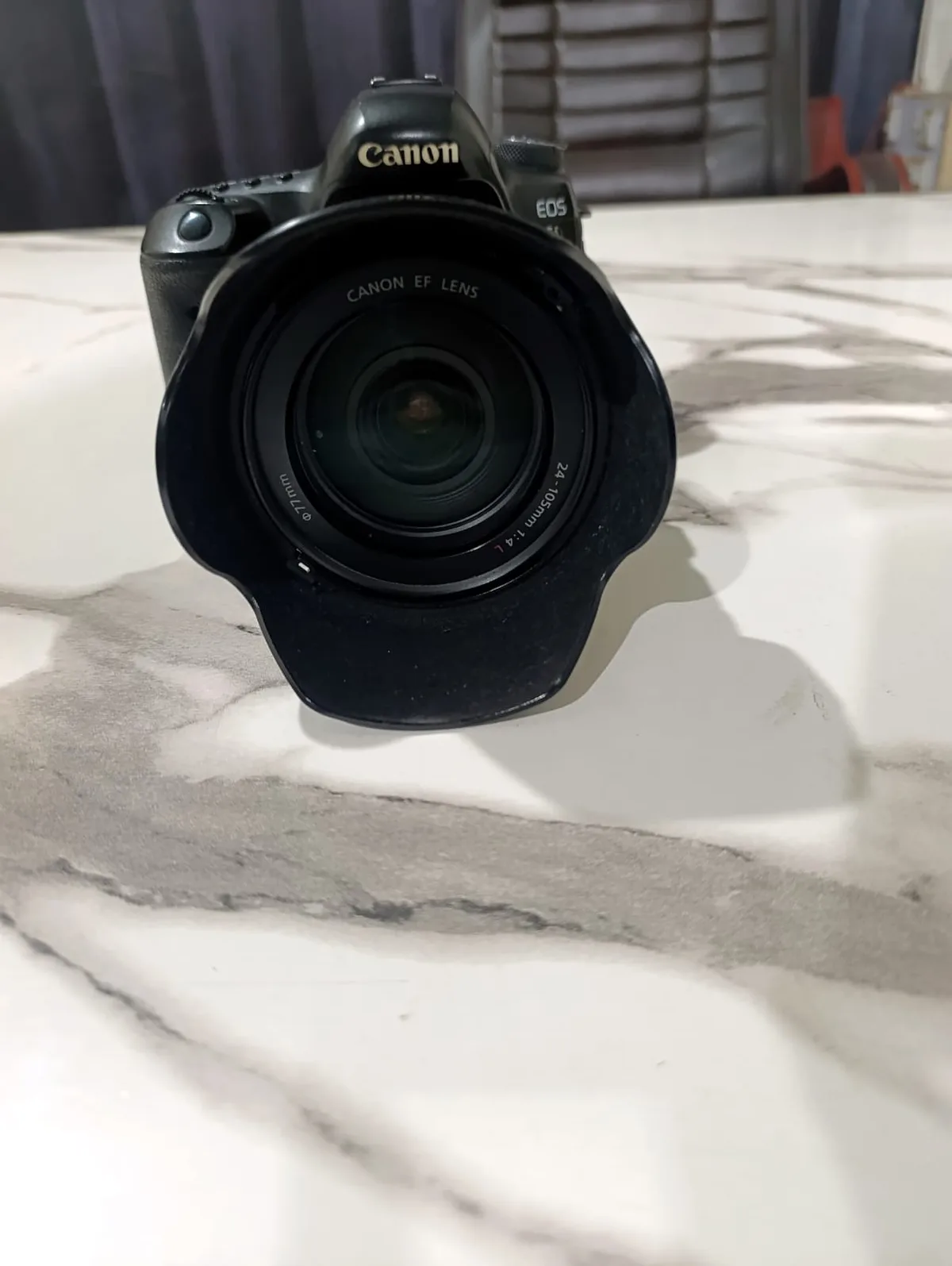
Camera Lenses Explained: What All the Numbers and Letters Mean
EF 24-105mm f/4L IS USM — decoded piece by piece. What focal length and f-numbers actually do, what every brand's letters mean, and what to check before you buy.
Aperture, Shutter Speed and ISO: The Exposure Triangle, Properly Explained
The triangle is taught as three equal controls. It isn't — each one has a side effect, and the side effect matters more than the brightness. Here's how to choose.
How to Choose a Lens for Wildlife and Bird Photography
Choosing a lens for wildlife and bird photography comes down to focal length, maximum aperture, stabilization and weight. Here's how each one trades off.
What Is a Lens Mount? Canon RF vs EF, Sony E, Nikon Z and Fujifilm X
A lens mount is the bayonet that locks lens to camera — and it decides which lenses you can buy. RF, EF, E, Z and X explained, plus adapter compatibility.
How to Choose a Lens for Astrophotography and Night Sky Photos
Choosing an astrophotography lens means balancing focal length, a fast aperture and corner sharpness. Here's how to weigh each one for night sky shots.