Best Focal Length for Portraits
As an Amazon Associate we earn from qualifying purchases. Some links in this guide are affiliate links — see our affiliate disclosure for details.
Short answer: What is the best focal length for portraits?
For most portraits, 85mm is the best all-round focal length on a full-frame camera, because it flatters faces, compresses features naturally and blurs backgrounds well. The usable range runs from about 50mm to 135mm: 50mm suits natural, wider portraits, 105mm and 135mm give tighter headshots with more compression, and 35mm suits environmental portraits that include the setting. On an APS-C camera, divide these numbers by about 1.5 to get the same view.
Affiliate note: This post has affiliate links. If you buy through them, the site may earn a small commission at no extra cost to you.
Why is 50mm to 135mm the "portrait zone"?
Focal length changes how a face looks because it changes how far away the photographer must stand to frame the subject. Wide lenses used close to a face exaggerate the nose and forehead. Longer lenses allow a more comfortable distance, so facial proportions look natural and the background appears larger and softer behind the subject. The 50mm to 135mm range gives flattering proportions with enough working distance to talk to the subject.
How do the common focal lengths compare?
| Focal length (full frame) | Best for | Notes |
|---|---|---|
| 35mm | Environmental portraits and tight spaces | Shows the surroundings; stand close to the subject |
| 50mm | Natural, authentic portraits and half-length shots | Near the way the eye sees the scene; versatile and often affordable |
| 85mm | Classic head-and-shoulders portraits | Flattering perspective and strong background blur |
| 105mm | Headshots and tighter portraits | More compression; often a macro lens too |
| 135mm | Tight headshots and dramatic backgrounds | Strong compression; needs space to work |
| 70-200mm zoom | Events, weddings and location work | Flexible framing from one position |
Best 50mm lenses, best 105mm lenses and best 135mm lenses are shown as examples of the range.

The crowd-pleaser: 85mm
An 85mm lens is the standard portrait choice because it offers a flattering perspective at a comfortable working distance. Most 85mm lenses have wide apertures such as f/1.4 or f/1.8, which give creamy background blur and good low-light performance.
The authentic storyteller: 50mm
A 50mm lens frames close to how the eye sees, which makes portraits look natural. It is also the cheapest way to get a fast prime. On an APS-C camera, a 50mm lens frames like a roughly 75mm to 80mm lens, which makes it a classic portrait lens at low cost.
Setting the scene: 35mm
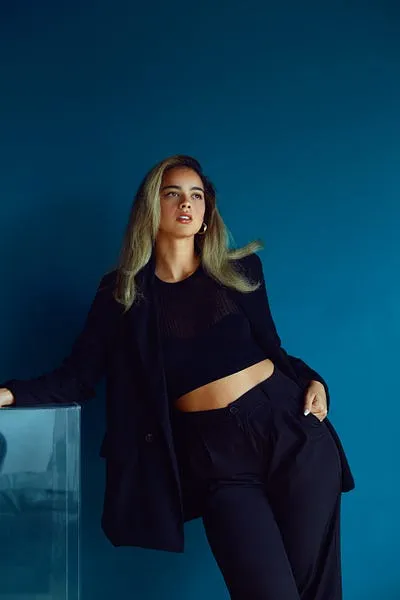
A 35mm lens includes the surroundings, so the portrait tells a story about where the subject is. It requires a closer position, so watch for distortion at the edges of the frame, and avoid placing faces near the corners.
Dramatic compression: 105mm and 135mm
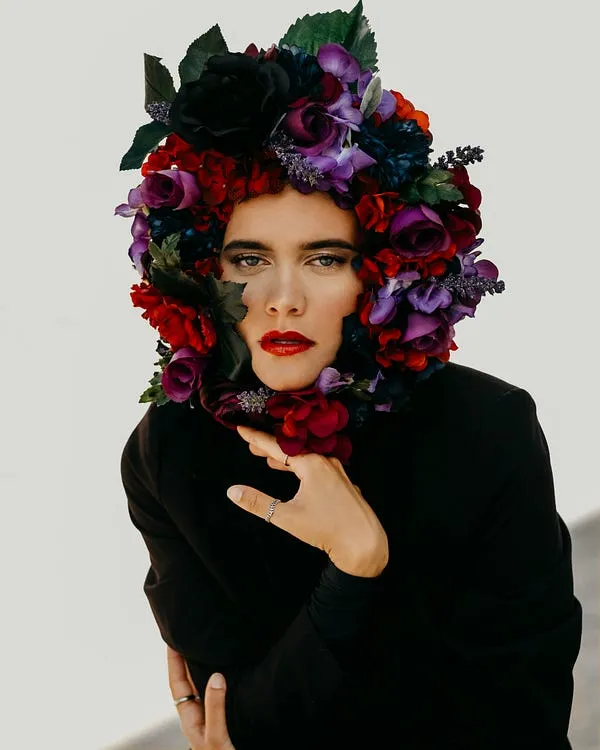
Longer lenses compress the distance between subject and background, which makes the background look larger and softer. They suit tight headshots, outdoor shoots with room to stand back, and photographers who want a polished, studio-like look.
Prime or zoom?
- Primes offer wider apertures, sharper results and lighter bodies. They need the photographer to move to change the framing.
- Zooms such as a 70-200mm f/2.8 let the photographer adjust framing from one position. They are heavier but work well for events, weddings and fast-moving sessions.
How to choose
- Start with 50mm or 85mm. One of these covers most portraits.
- Match the lens to the space. Small rooms need 35mm or 50mm, while open locations suit 85mm and longer.
- Check the aperture. f/1.8 to f/2.8 gives soft backgrounds; f/4 keeps more of the face sharp for groups.
- Consider the camera. On APS-C, choose a shorter focal length to get the same view.
For brand-specific suggestions, see the best lens for portraits on Canon, the best Nikon portrait lenses and the best Sony lenses for portrait photography. The best budget portrait lenses guide covers cheaper options.
More picks
- 24–70mm zoom lenses — View on Amazon
- 70–200mm zoom lenses — View on Amazon
Frequently asked questions
Is 50mm or 85mm better for portraits? 85mm is more flattering for headshots and gives more background blur. 50mm is more versatile and usually cheaper.
What focal length should I avoid for close portraits? Very wide lenses, such as 24mm, distort faces when used close.
What is the best focal length on APS-C? Around 50mm to 56mm on APS-C gives a view similar to 75mm to 85mm on full frame.
Do I need a fast aperture for portraits? A wide aperture helps blur the background and work in low light, but it is not essential for every style.
Written by
Marien CartelProfessional and Certified Digital Photographer born in the USA, with 22 years of experience in the field of photography.
Related Guides
Best Focal Length for Vlogging
Best Focal Length for Vlogging: what to look for, what to skip and how to choose the right one for your budget.
Best Lens for Portraits Canon
The Lens That Sees Your Soul: Finding the Right Canon for Portraits. What the Canon EF 50mm f/1.4 USM gets right, what it does not, and who should buy it.
Best Camera for Portraits and Street Photography
Best Camera for Portraits and Street Photography — what the Canon 90D offers, where it falls short, and whether it is worth buying.
Best Camera for Portraits Under $1000
The guide's pick is the Canon R10, chosen for its autofocus and value at this price.
Best Affordable Camera for Portrait Photography
Best Affordable Camera for Portrait Photography: Canon EOS R50 and Sony a6400 compared on features, price and who each one suits.
Best Camera for Model Photography
Best Camera for Model Photography: Canon EOS R5, Nikon Z9 and Sony A7 IV compared on features, price and who each one suits.