Best Cameras for Seniors (2026): Easy to Use Picks
As an Amazon Associate we earn from qualifying purchases. Some links in this guide are affiliate links, see our affiliate disclosure for details.
The best camera for an older adult is the one that is comfortable to hold, easy to read and simple enough that it comes out of the drawer. That usually means a light body, a bright screen or a viewfinder, clear controls and, for many people, a long zoom for grandchildren, birds and travel.
This guide compares five cameras on the figures the makers publish and on published reviews. We have not handled these cameras ourselves, so the notes below are about specifications and what reviewers found, not personal testing. If a phone already does the job, the guide on phone or camera for seniors helps you decide whether to buy anything at all.
Quick verdict
| If you want... | Pick | Why |
|---|---|---|
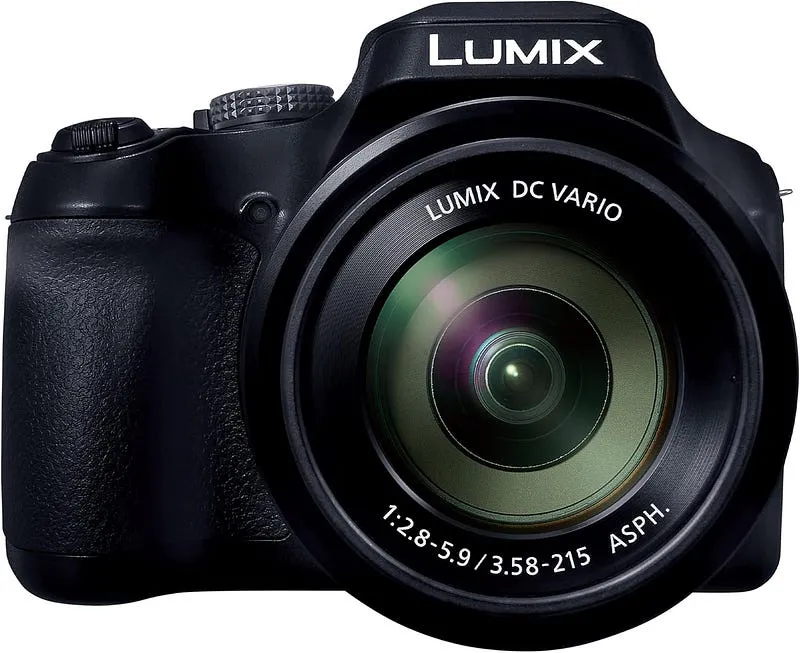
| A huge zoom and a viewfinder | Panasonic Lumix FZ80D | 60x zoom (20–1200mm equivalent), a 2,360k-dot viewfinder and a 3-inch screen; 640 g with battery and card |
| A similar superzoom with a tilting screen | Canon PowerShot SX70 HS | 65x zoom, a 3-inch vari-angle screen; 610 g with battery and card |
| The lightest option with a touchscreen | Sony ZV-1 II | 292 g with battery and card, 3-inch touchscreen; no viewfinder |
| A pocket compact with strong stabilization | Canon PowerShot V1 | Optical image stabilization, 426 g with battery and card; no viewfinder |
| A step up with a big grip and a viewfinder | Fujifilm X-S20 | Large grip, 7-stop in-body stabilization, 491 g body; lens extra |
What matters for an older user
- Weight. Heavy cameras get left at home. Check the weight with battery and card, and remember that a mirrorless body weighs more once a lens is on it.
- Screen and viewfinder. A flip-out or vari-angle screen helps with awkward angles. A viewfinder helps in bright sun and lets you brace the camera against your face.
- Simple controls. Touchscreens are quick to learn but can be fiddly with cold hands or tremors; physical buttons are the opposite.
- Zoom. A long zoom is the main reason to buy a camera instead of using a phone.
- Charging. USB charging is convenient because it works with a standard cable.
Panasonic Lumix FZ80D: the zoom with a viewfinder
The FZ80D is a bridge camera: one fixed lens that does everything. Panasonic lists the weight at 640 g with battery and SD card (596 g body only). The lens covers 20–1200mm in 35mm terms at f/2.8–5.9 with optical image stabilization. Amateur Photographer lists a 3.0-inch screen of about 1,840k dots, an OLED viewfinder of 2,360k dots, 4K video at 30p and USB-C charging.
Good for: wildlife, sports from the stands and distant family moments. Watch out for: it is the heaviest camera here, and a small 1/2.3-inch sensor means image quality falls behind a larger-sensor camera in dim light.
Canon PowerShot SX70 HS: the other superzoom
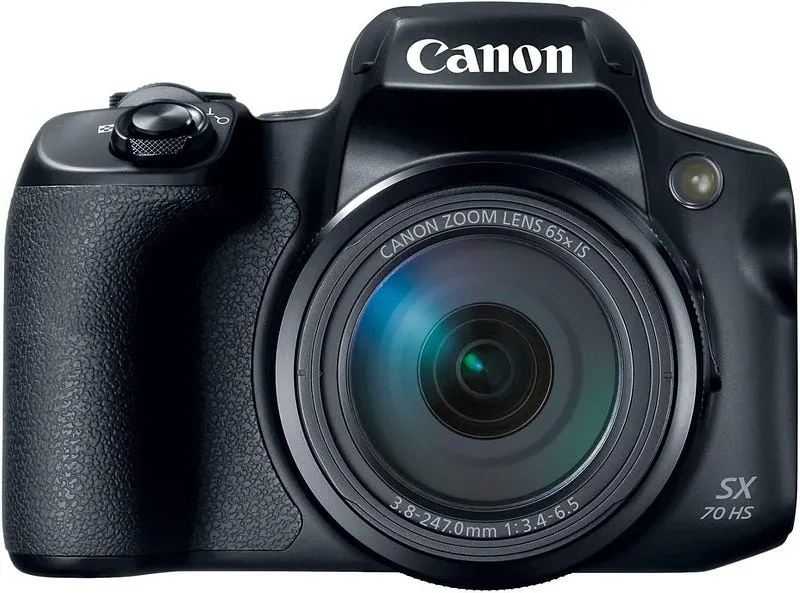
Canon lists the SX70 HS at about 610 g with battery and card (574 g body only), with a 1/2.3-type sensor of about 20.3 megapixels and a 3.0-inch vari-angle screen of about 920,000 dots. The lens is a 65x zoom. Our existing guides to bridge cameras and bridge cameras for beginners cover it and its rivals in more detail.
Good for: the same jobs as the FZ80D, with a screen that tilts out. Watch out for: weight and a small sensor, as with any bridge camera.
Sony ZV-1 II: light and touch-first
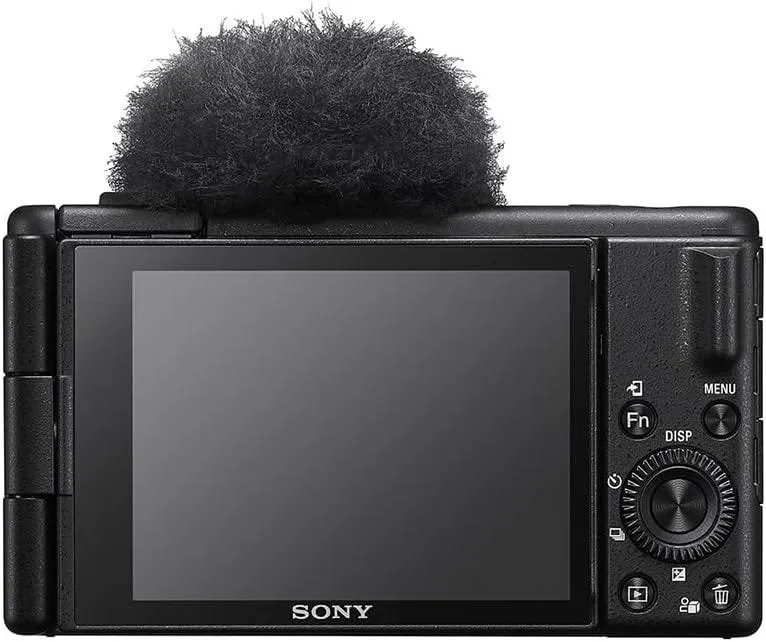
Sony lists the ZV-1 II at 292 g with battery and card (266 g body only) with an 18–50mm equivalent f/1.8–4.0 lens and a 3.0-inch touchscreen that flips out. DPReview calls it small and pocketable and found its grip bump and thumb rest comfortable, but said an external handle was essential for steady use. It has few buttons and relies on the touchscreen, and there is no viewfinder, which DPReview notes can be a challenge in bright sunlight. Sony also lists accessibility options such as a screen reader and focus magnifier.
Good for: someone who wants the lightest camera and is happy with a touchscreen. Watch out for: stabilization is electronic and applies to video only, so it is a weaker choice if hand shake is a concern (see the shaky hands guide).
Canon PowerShot V1: the compact with optical stabilization
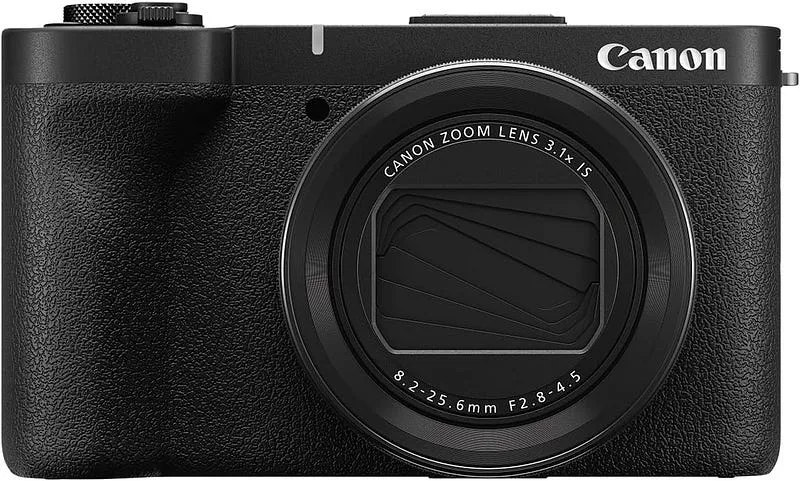
Canon lists the V1 at about 426 g with battery and card (379 g body only) with a 16–50mm equivalent f/2.8–4.5 lens. Stabilization combines optical stabilization, digital movie stabilization and subject-tracking stabilization, and MPB describes the optical stabilization as useful with shaky hands in cold conditions. There is no viewfinder. See our V1 vs G7 X Mark III comparison for the full picture.
Good for: a capable pocket camera with real stabilization. Watch out for: no viewfinder, and it costs more than the entry-level options.
Fujifilm X-S20: the step up
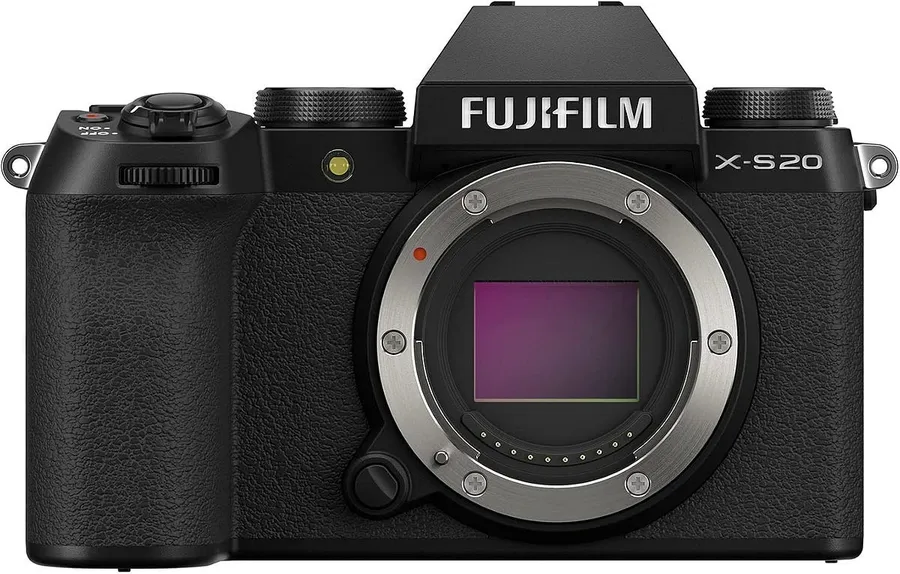
The X-S20 weighs 491 g including battery and card (lens extra), with a large grip, a fully articulating 3.0-inch screen, a 2.36-million-dot viewfinder and in-body stabilization rated at 7 stops. It is more camera than most people need, but it suits someone who wants to keep growing. Read the X-S20 review for more.
Good for: a comfortable grip and a viewfinder. Watch out for: more menus, and the lens adds weight and cost. The OM System OM-5 is a similar idea at 414 g with 7.5-stop stabilization, a viewfinder and a fully articulating screen.
Before you buy
- Hold it, if you can. A shop visit tells you more about grip and weight than any table.
- Check the menu text size and whether you can use it with your glasses.
- Buy a strap that suits you. A cross-body strap takes the weight off your hand.
- Think about the zoom you will really use, because a longer zoom also magnifies shake.
Frequently asked questions
What is the easiest camera for an older person to use?
There is no single answer. The Sony ZV-1 II is the lightest and leans on its touchscreen, while a bridge camera such as the Panasonic FZ80D has a viewfinder and a long zoom. Handling it in a shop is the best test.
Do I need an expensive camera?
No. Weight, a readable screen and a zoom that matches your use matter more than price.
What if I have arthritis or tremors?
See our guides to cameras for arthritis and weak grip and to cameras for shaky hands and tremors. This guide is not medical advice.
Sources
Specifications come from the makers and published reviews: Panasonic FZ80D and Amateur Photographer's review, Canon's SX70 HS specifications and support page, Sony's ZV-1 II specifications and DPReview's ZV-1 II review, Canon's PowerShot V1 manual and MPB's V1 review, and the Wikipedia entries for the Fujifilm X-S20 and OM System OM-5. Check current figures on each maker's site before you buy.
Camera & Lens Settings by Real-World Use Case
Match your focal length, aperture, shutter speed, and lighting modifier to the exact environment you shoot in.
Tattoo Artists & Micro-Realism Portfolios
- Best Body:
- Sony Alpha a7 III / Fujifilm X-T4
- Ideal Lens:
- 90mm f/2.8 Macro (detail) or 50mm f/1.8 (sleeves & back pieces)
- Aperture & Shutter:
- f/5.6 – f/8 (keeps curved forearms and calves sharp edge-to-edge) · 1/125s – 1/200s handheld (or 1/60s on tripod)
- Room Distance:
- 0.4m – 1.5m (1.5 to 5 ft)
Barbershops, Hairstylists & Color Salons
- Best Body:
- Sony a7 IV / Canon EOS R6 Mark II
- Ideal Lens:
- 50mm f/1.8 (tight stations) or 85mm f/1.8 (spacious salons)
- Aperture & Shutter:
- f/1.8 – f/2.8 (blurs background chairs while keeping the lineup tack-sharp) · 1/160s – 1/250s (freezes subtle head movement in the chair)
- Room Distance:
- 1.5m – 2.4m (5 to 8 ft from the styling chair)
Makeup Artists (MUA) & Beauty Tutorials
- Best Body:
- Sony Alpha a6400 / Canon G7 X Mark III
- Ideal Lens:
- Sigma 56mm f/1.4 DC DN (APS-C) or 50mm–85mm f/1.8 (Full Frame)
- Aperture & Shutter:
- f/2.8 – f/4 for full-face sharpness; f/5.6 for macro eye/lip close-ups · 1/125s for stills; 1/50s (24p) or 1/120s (60p) for video tutorials
- Room Distance:
- 1.2m – 2.2m (4 to 7 ft)
Written by
Marien CartelMarien Cartel runs Marien Cartel Photography, a camera and lens buying-guide site, and photographs the gear shown on it.
Related Guides

Best Camera for YouTube Beginners (2026): 5 Picks by Budget
Webcam, Panasonic G7, Sony a6400, a7 III or Canon R6 for starting a YouTube channel? A quick verdict by budget, plus why audio and lighting come first.
6 Best starter camera for wildlife photography: (2026 Guide & Reviews)
Best starter camera for wildlife photography: Panasonic FZ80, Nikon D500 and Canon EOS 5D Mark IV compared on features, price and who each one suits.
Best Camera for Shaky Hands and Tremors (2026)
How stabilization works and which cameras help with shaky hands: OM System OM-5, Fujifilm X-S20, Canon V1 and others, with the limits of each, based on published specs.
Phone or Camera for Seniors? How to Choose
When a smartphone is enough for an older adult and when a dedicated camera is worth buying, with a simple checklist and five easy cameras to consider.
Best Camera for Arthritis and Weak Grip (2026)
Light cameras and handling features for people with arthritis or a weak grip, compared by weight, grip, controls and strap options from published specs.
Best Camera for Sports Photography Beginners (2026)
Canon EOS R10, Sony A6400, Nikon Z50 or Fujifilm X-S20 for a first sports camera? Burst rate, autofocus and price compared, with a quick verdict.