Best Camera for Arthritis and Weak Grip (2026)
As an Amazon Associate we earn from qualifying purchases. Some links in this guide are affiliate links, see our affiliate disclosure for details.
If gripping or pressing is painful, a camera has to be light, easy to hold without squeezing and simple to operate. Weight is the clearest number to compare, but grip shape, how many buttons need pressing and how you carry the camera also matter.
This guide compares cameras on published specifications and reviews. We have not handled them ourselves, and this is not medical advice: an occupational therapist can advise on grip aids for your hands.
Quick verdict
| Camera | Weight (battery and card) | Handling note |
|---|---|---|
| Sony ZV-1 II | 292 g (266 g body only) | Lightest; few buttons, touch-led; DPReview found an external handle essential |
| OM System OM-5 | 414 g, lens extra | Compact, lightweight body design, viewfinder |
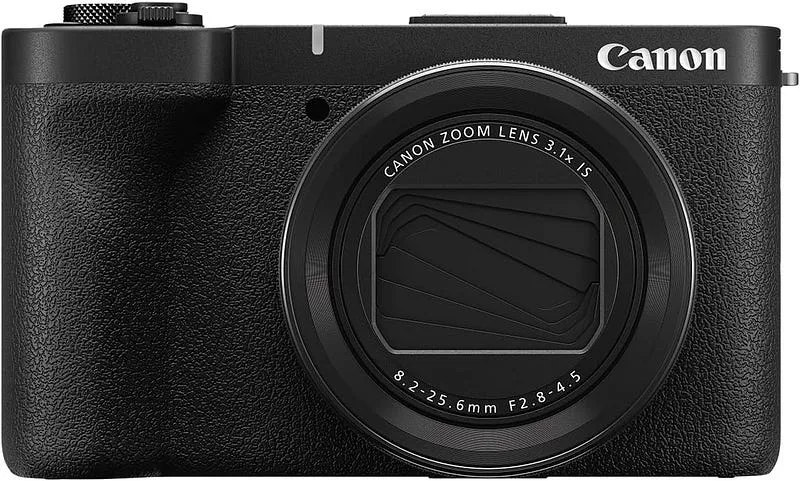
| Canon PowerShot V1 | 426 g (379 g body only) | Pocketable compact; no viewfinder |
| Fujifilm X-S20 | 491 g, lens extra | Large grip |
| Canon PowerShot SX70 HS | 610 g (574 g body only) | Long zoom; heavier |
| Panasonic Lumix FZ80D | 640 g (596 g body only) | Long zoom and viewfinder; heaviest |
What helps a weak or painful grip
- Low weight. Every gram counts when you hold a camera for a while. Mirrorless weights exclude the lens, so choose a small lens.
- A shaped grip. A deep grip lets you hold the camera with less squeeze. Wikipedia describes the X-S20's grip as large, and DPReview called the ZV-1 II's grip bump and thumb rest efficient, though it still recommended an external handle.
- Fewer small buttons. Touchscreens reduce button presses, but can be hard with cold or stiff fingers. Try both.
- A strap that carries the weight. A cross-body or neck strap takes load off your hands and wrists.
- Support. A monopod or a bag clip can hold the weight between shots.
The picks
Sony ZV-1 II: the lightest
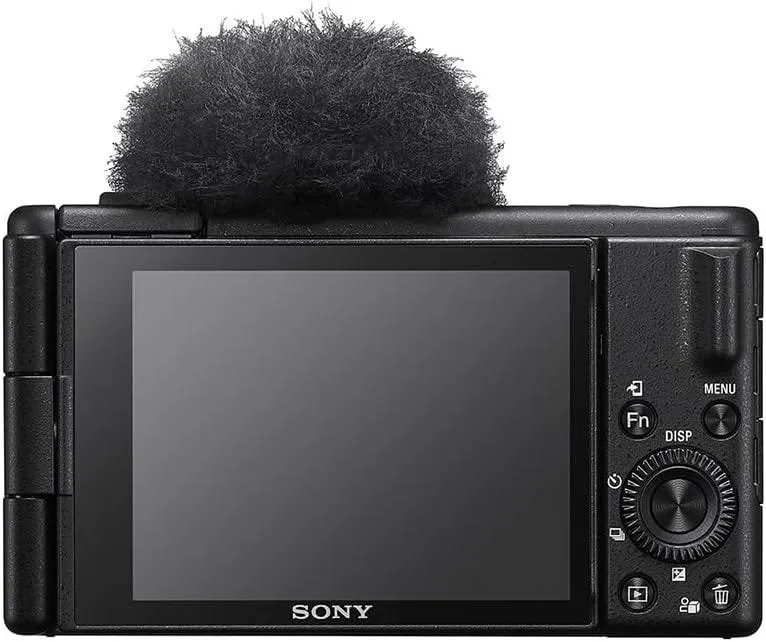
At 292 g with battery and card, this is the lightest camera in the list. Its touch-led controls mean fewer button presses. DPReview said it is relatively pocketable, found the grip comfortable but said an external handle was essential for steady operation. Sony sells an optional Bluetooth grip that doubles as a tripod, and DPReview listed it at $139.99. There is no viewfinder and the stabilization is electronic and video only.
OM System OM-5: light for a camera with interchangeable lenses
Wikipedia lists the OM-5 at 414 g with battery and card and says the body was designed to be compact and lightweight. It has a 3-inch fully articulating screen and a 2.36-million-dot viewfinder. A small lens keeps the total weight down.
Canon PowerShot V1: a compact with a large sensor
Canon lists 426 g with battery and card and 379 g body only. MPB calls it lightweight and compact. It has a 16–50mm equivalent lens and no viewfinder. See our V1 vs G7 X Mark III comparison for the details.
Fujifilm X-S20: a big grip
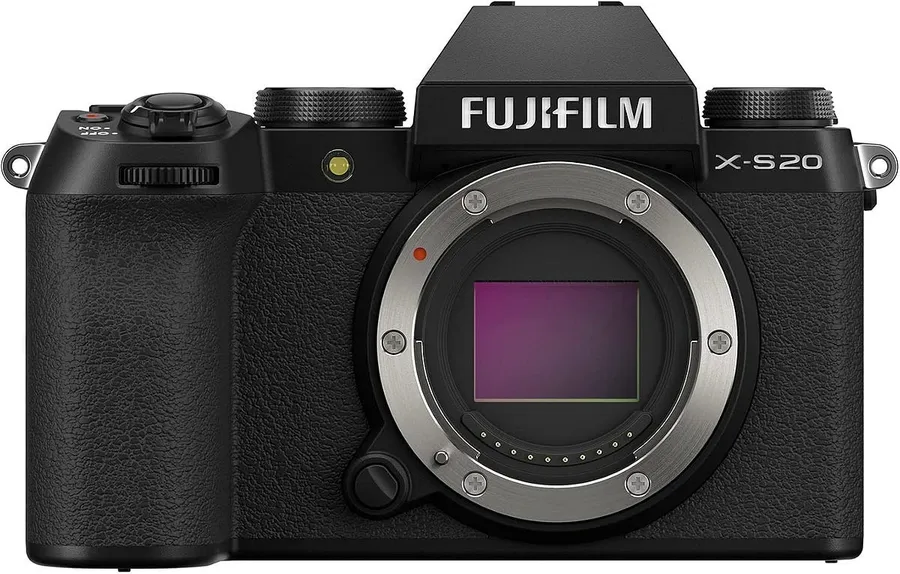
At 491 g with battery and card, lens extra, it is heavier than the compacts, but Wikipedia lists a large grip, which many people find easier on the hand. Pair it with a light lens. Our X-S20 review has more.
Panasonic FZ80D and Canon SX70 HS: heavy but all-in-one
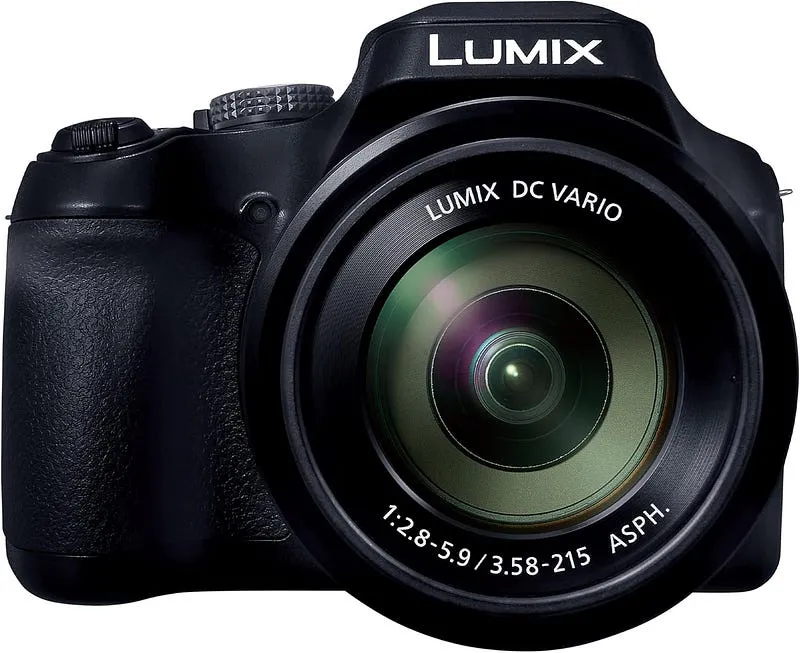
These superzoom cameras weigh 640 g and 610 g with battery and card. You carry one lens that does everything, and the FZ80D has a viewfinder you can lean against your face, but they are the heaviest options. If weight is the main problem, start lighter. If you want the zoom, use a strap and a monopod. See our bridge camera guide.
Practical ideas
- Hold the camera with both hands close to your body and rest your elbows against you.
- Use a cross-body strap so the camera hangs without gripping.
- Try the camera in a shop and press the buttons you will use most.
- Consider a lighter, smaller lens or a fixed-lens camera.
- For very light use, see our guide to lightweight cameras.
Frequently asked questions
What is the lightest camera that is better than a phone?
On the list above, the Sony ZV-1 II at 292 g. A compact with a larger sensor and a real zoom lens can beat a phone for some jobs, but see our guide to phone or camera for seniors.
Are touchscreens easier or harder?
It depends on your hands. Touch needs light taps but can be unreliable with cold or dry fingers; buttons need pressing. Try both before you buy.
Is a DSLR a bad idea?
DSLRs and cameras with big lenses are usually heavier, so for a weak grip they are rarely the first choice.
Sources
Specifications come from the makers and published reviews: Sony's ZV-1 II specifications and DPReview's review, the Wikipedia entries for the OM System OM-5 and Fujifilm X-S20, Canon's PowerShot V1 manual, MPB's V1 review, Canon's SX70 HS specifications and Panasonic's FZ80D page. Check current figures before you buy.
Camera & Lens Settings by Real-World Use Case
Match your focal length, aperture, shutter speed, and lighting modifier to the exact environment you shoot in.
Tattoo Artists & Micro-Realism Portfolios
- Best Body:
- Sony Alpha a7 III / Fujifilm X-T4
- Ideal Lens:
- 90mm f/2.8 Macro (detail) or 50mm f/1.8 (sleeves & back pieces)
- Aperture & Shutter:
- f/5.6 – f/8 (keeps curved forearms and calves sharp edge-to-edge) · 1/125s – 1/200s handheld (or 1/60s on tripod)
- Room Distance:
- 0.4m – 1.5m (1.5 to 5 ft)
Barbershops, Hairstylists & Color Salons
- Best Body:
- Sony a7 IV / Canon EOS R6 Mark II
- Ideal Lens:
- 50mm f/1.8 (tight stations) or 85mm f/1.8 (spacious salons)
- Aperture & Shutter:
- f/1.8 – f/2.8 (blurs background chairs while keeping the lineup tack-sharp) · 1/160s – 1/250s (freezes subtle head movement in the chair)
- Room Distance:
- 1.5m – 2.4m (5 to 8 ft from the styling chair)
Makeup Artists (MUA) & Beauty Tutorials
- Best Body:
- Sony Alpha a6400 / Canon G7 X Mark III
- Ideal Lens:
- Sigma 56mm f/1.4 DC DN (APS-C) or 50mm–85mm f/1.8 (Full Frame)
- Aperture & Shutter:
- f/2.8 – f/4 for full-face sharpness; f/5.6 for macro eye/lip close-ups · 1/125s for stills; 1/50s (24p) or 1/120s (60p) for video tutorials
- Room Distance:
- 1.2m – 2.2m (4 to 7 ft)
Written by
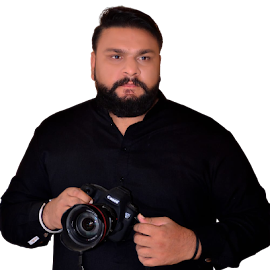
Marien CartelMarien Cartel runs Marien Cartel Photography, a camera and lens buying-guide site, and photographs the gear shown on it.
Related Guides

Best Camera for YouTube Beginners (2026): 5 Picks by Budget
Webcam, Panasonic G7, Sony a6400, a7 III or Canon R6 for starting a YouTube channel? A quick verdict by budget, plus why audio and lighting come first.

6 Best starter camera for wildlife photography: (2026 Guide & Reviews)
Best starter camera for wildlife photography: Panasonic FZ80, Nikon D500 and Canon EOS 5D Mark IV compared on features, price and who each one suits.
Best Cameras for Seniors (2026): Easy to Use Picks
Five easy cameras for older adults compared on weight, screen, viewfinder and zoom: Panasonic FZ80D, Canon SX70 HS, Sony ZV-1 II, Canon V1 and Fujifilm X-S20.
Best Camera for Sports Photography Beginners (2026)
Canon EOS R10, Sony A6400, Nikon Z50 or Fujifilm X-S20 for a first sports camera? Burst rate, autofocus and price compared, with a quick verdict.
Best Camera for Shaky Hands and Tremors (2026)
How stabilization works and which cameras help with shaky hands: OM System OM-5, Fujifilm X-S20, Canon V1 and others, with the limits of each, based on published specs.
Best Camera for Sports Photography Under $1,000 (2026)
Sony A6000 or Fujifilm X-T30 for sports under $1,000? Burst rates, autofocus points and prices compared, plus the Canon EOS M50 Mark II.