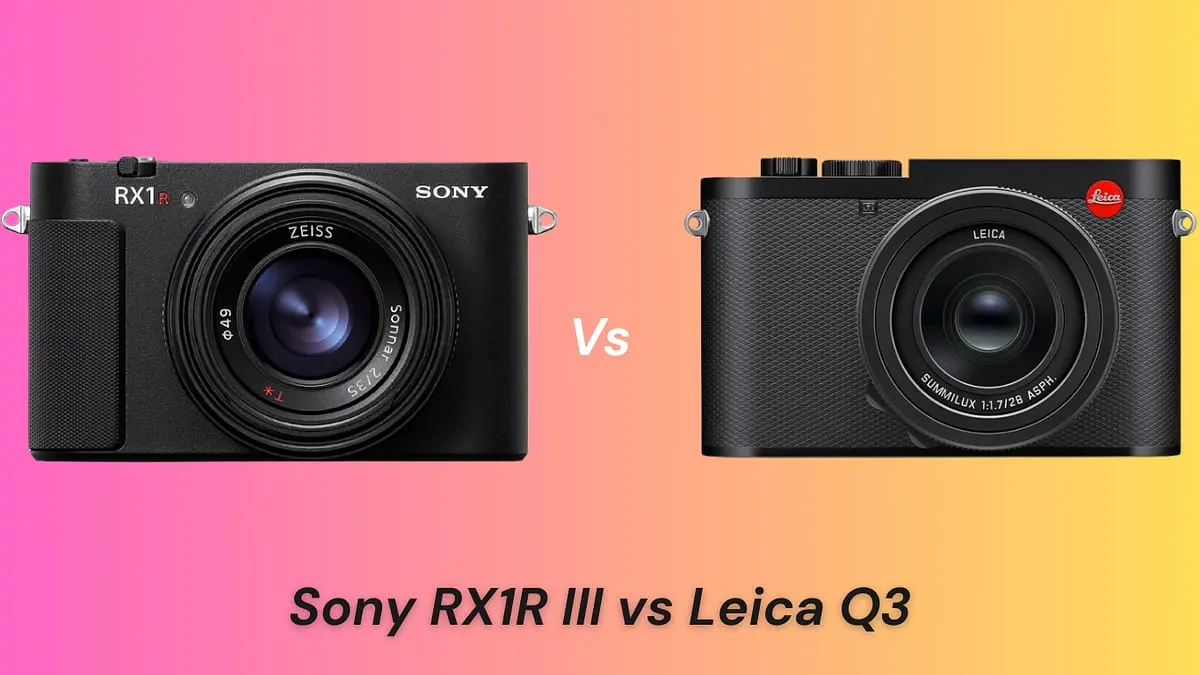
Sony RX1R III vs Leica Q3
As an Amazon Associate we earn from qualifying purchases. Some links in this guide are affiliate links — see our affiliate disclosure for details.
Short answer: Should you buy the Sony RX1R III or the Leica Q3?
The Sony RX1R III is smaller, lighter and has more advanced autofocus, which makes it better for travel and moving subjects. The Leica Q3 is the more versatile package, with a stabilized 28mm f/1.7 Summilux lens, a tilting touchscreen and a slightly longer rated battery life. The RX1R III weighs about 498 g with a 61-megapixel sensor and a fixed 35mm f/2 lens, while the Q3 has a 60-megapixel sensor and costs more. Choose by focal length (35mm or 28mm) and how much size and stabilization matter.
Affiliate note: This post has affiliate links. If you buy through them, the site may earn a small commission at no extra cost to you.
How do they compare?
| Sony RX1R III | Leica Q3 | |
|---|---|---|
| Sensor | 61 MP full frame | 60 MP full frame |
| Lens | Fixed 35mm f/2 | Fixed 28mm f/1.7 Summilux |
| Weight | About 498 g | About 750 g |
| Stabilization | None in body or lens | Stabilized lens |
| Battery | NP-FW50, about 300 shots | BP-SCL6, about 350 shots |
| Screen | Check the maker's page | Tilting touchscreen |
| Autofocus | AI-based subject recognition | Contrast and phase detection with face and eye detection |
Sources: a TechRadar comparison and Apotelyt's comparison. Different sources report sealing and some other details differently, so check Sony's and Leica's pages for current figures.
The compact contender: Sony RX1R III
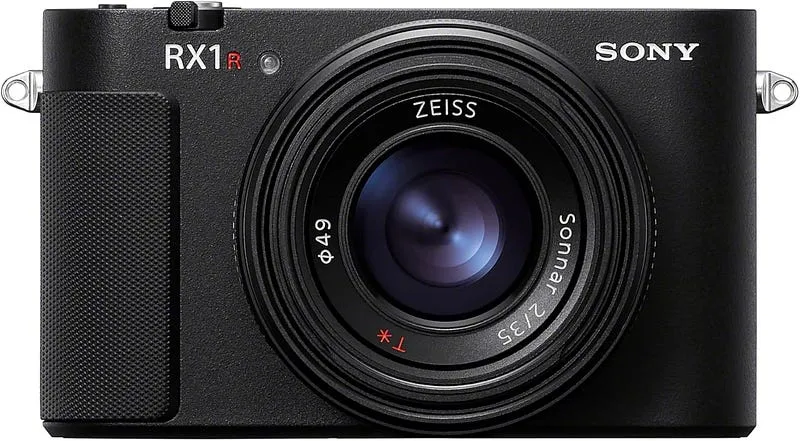
The Sony RX1R III is one of the smallest full-frame cameras with a fixed lens, which makes it easy to slip into a jacket pocket and ideal for discreet shooting. Its AI-based autofocus can lock onto eyes and track subjects such as pets and cyclists, and the 61-megapixel sensor gives plenty of detail for cropping.
Limits reviewers point out:
- No stabilization. There is none in the body or the lens, so low-light handheld work needs care.
- Battery life. The small battery is rated at about 300 shots.
- Rear screen and handling. Check the maker's page for the screen design before relying on it for low-angle shots.
The luxury tank: Leica Q3
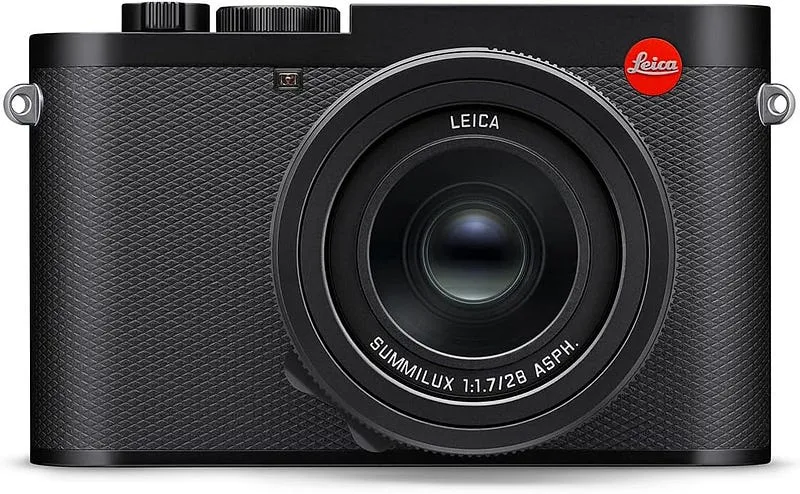
The Leica Q3 pairs a 60-megapixel sensor with a 28mm f/1.7 Summilux lens that handles low light well and has optical stabilization. A tilting touchscreen helps with low and high angles, and the body is dust- and splash-resistant. It is larger and heavier than the Sony, and it costs more.
Limits:
- Price. It is a luxury purchase.
- Autofocus in dim light. Reviewers report the Sony tracks more reliably in dim scenes.
- Size. It is a bigger camera for a pocket.
The crossroads: 35mm vs 28mm
This choice is about vision, not only specs. A 35mm view on the Sony frames scenes with a tighter, more narrative feel, such as a fisherman mending nets isolated in the frame. A 28mm view on the Leica includes more of the environment and suits tight spaces and architecture. The Q3 also offers digital crop modes for tighter framings.
Who should buy which?
- Sony RX1R III: photographers who value size, weight and strong autofocus, and who shoot in good light or with fast shutter speeds.
- Leica Q3: photographers who want a stabilized lens, a wider view, a tilting screen and a premium build.
For related guides, see the best Leica cameras, the best Leica camera for travel and the comparison of the Leica Q3 and Fujifilm GFX100RF.
More picks
- Sony RX1R III — View on Amazon
- Leica Q3 — View on Amazon
Frequently asked questions
Which is better for street photography? Both work. The Sony is smaller and more discreet, and the Leica has a wider lens and stabilization.
Do they have interchangeable lenses? No. Both have fixed lenses.
Is the Leica Q3 weather sealed? Leica lists dust and splash resistance. Check the maker's page for the rating.
Which has better battery life? The Q3 is rated slightly higher, at about 350 shots against about 300.

Written by
Marien CartelProfessional and Certified Digital Photographer born in the USA, with 22 years of experience in the field of photography.
Related Guides
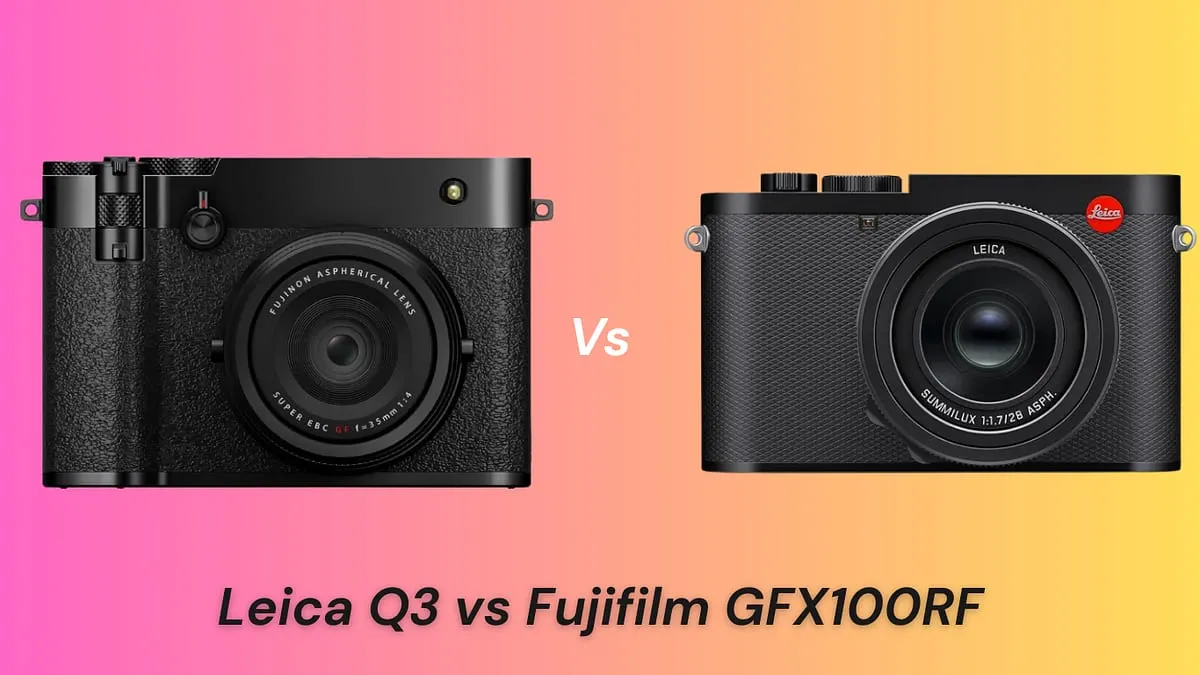
Leica Q3 vs Fujifilm GFX100RF
The guide's verdict is that it is not a competition: the author kept both.
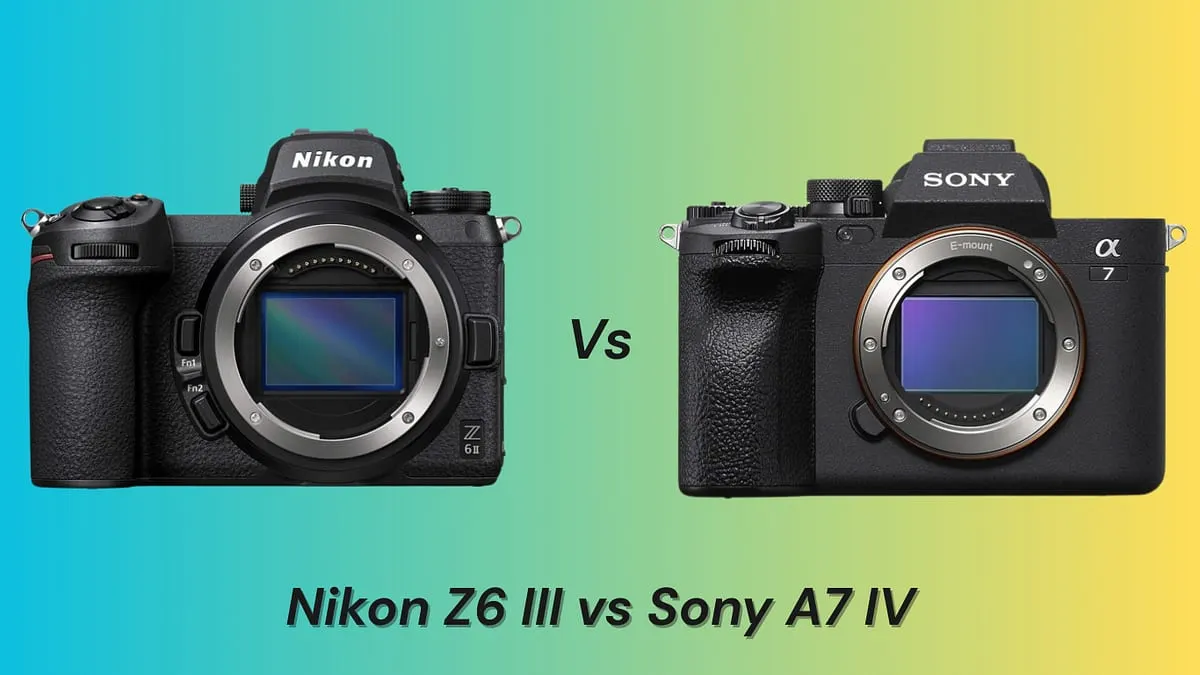
Nikon Z6 III vs Sony A7 IV
Nikon Z6 III vs Sony A7 IV compared — where each one wins, where it falls short, and who should buy which. Updated for 2026.
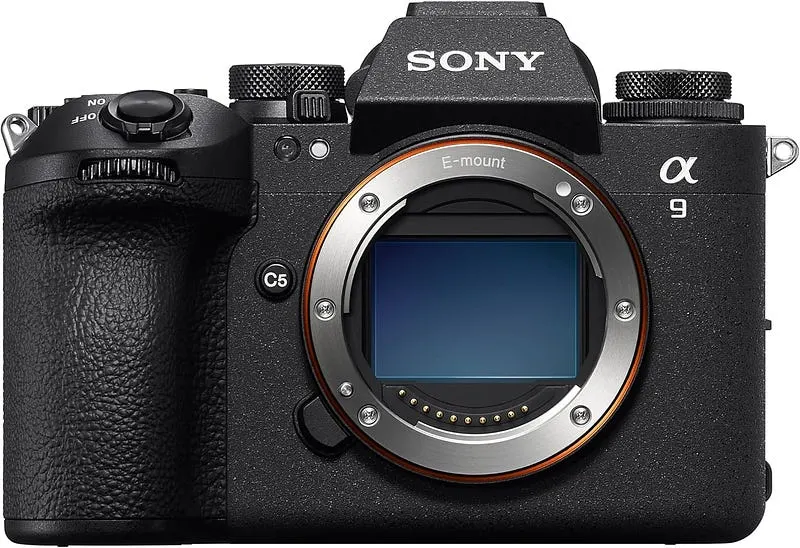
Best Lenses for Sony Alpha 9 III
Best Lenses for Sony Alpha 9 III — how Sony FE 16–35mm f/2.8 GM and Sony FE 24–70mm f/2.8 GM compare on features and price, and who each is best for.
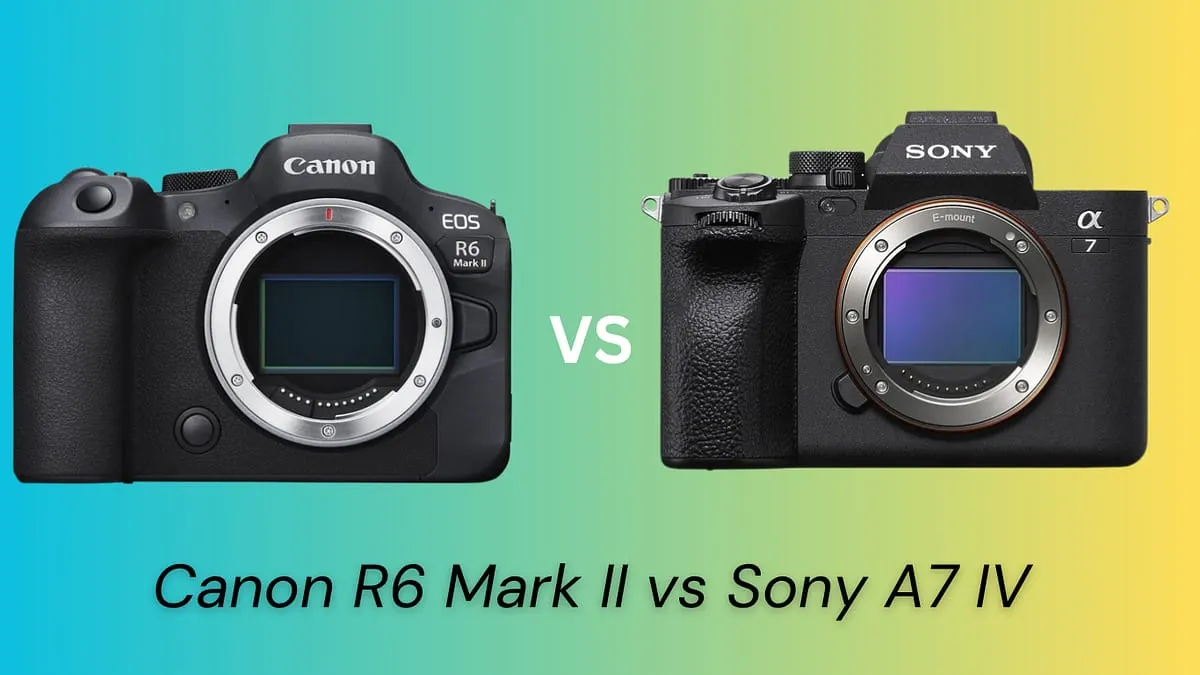
Canon R6 Mark II vs Sony A7 IV
The guide compares the two on image quality, autofocus, video, handling and lens ecosystem, then explains which one to choose depending on your needs and.
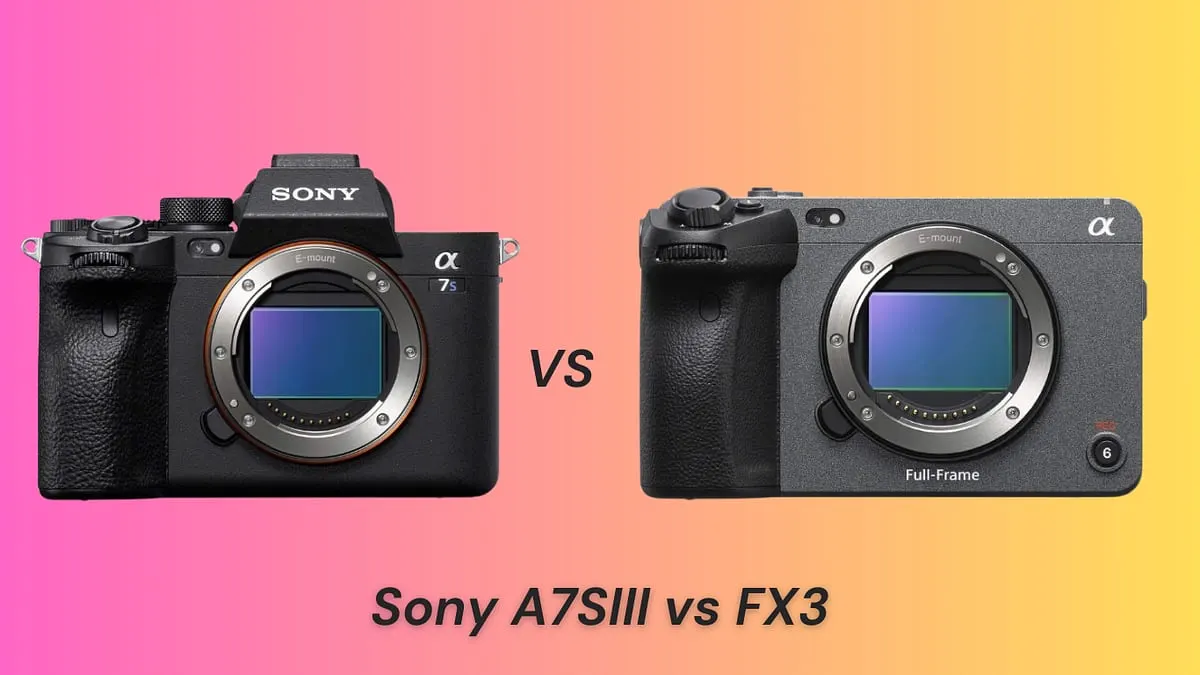
Sony A7SIII vs FX3
Sony A7SIII vs FX3 compared — where each one wins, where it falls short, and who should buy which. Updated for 2026.
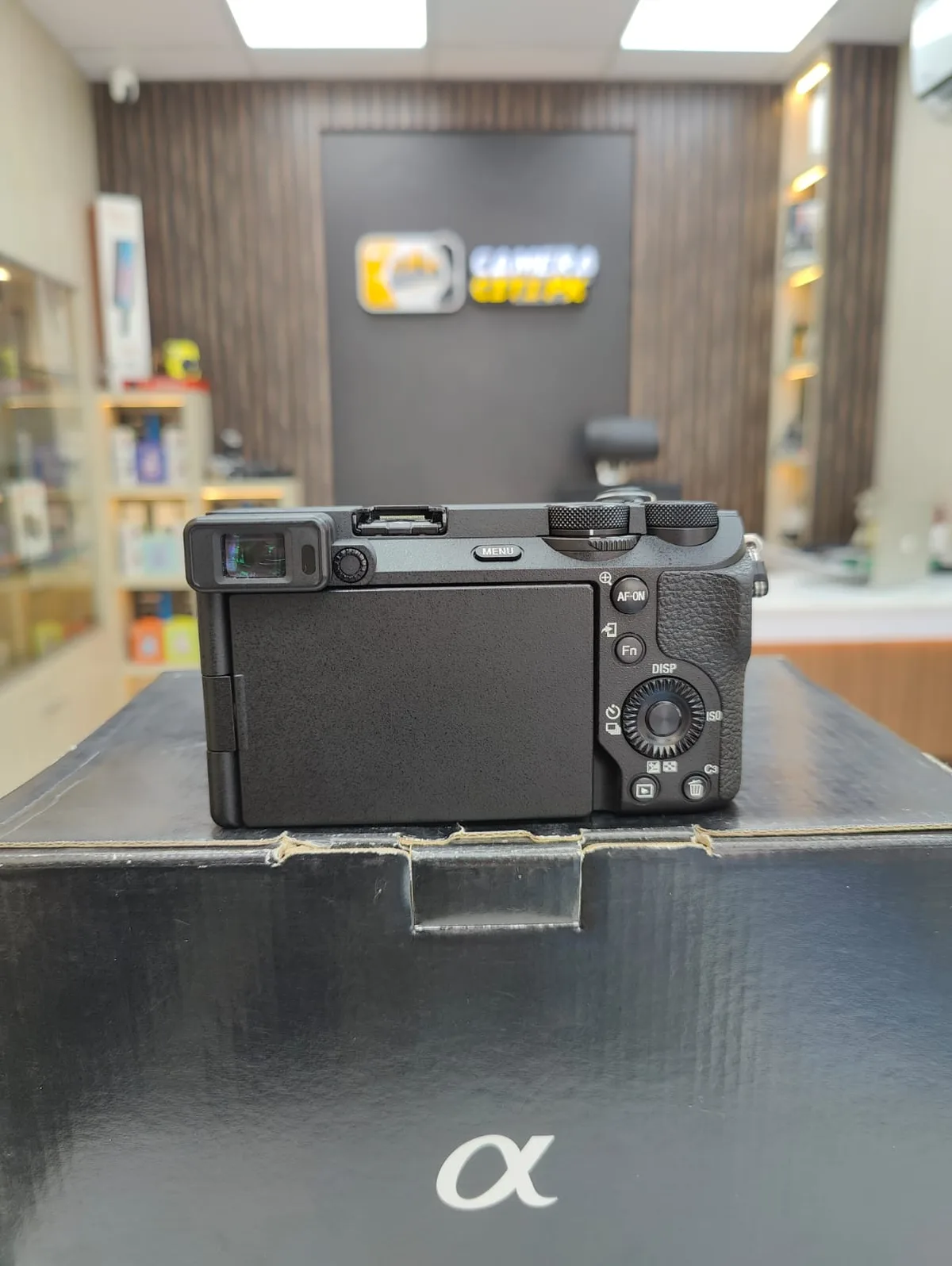
Sony A6600 vs A6700
The guide's verdict is yes for hybrid creators: the author sold the A6600 and calls the A6700 a generational leap, especially for video, autofocus.