Panasonic 24–60mm f/2.8 S Review
As an Amazon Associate we earn from qualifying purchases. Some links in this guide are affiliate links — see our affiliate disclosure for details.
Short answer: Is the Panasonic Lumix S 24-60mm f/2.8 worth buying?
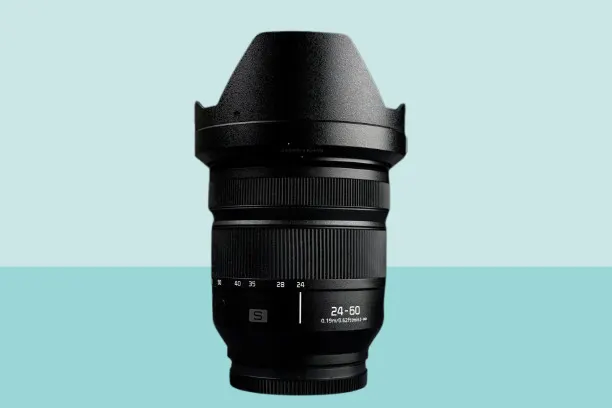
The Panasonic Lumix S 24-60mm f/2.8 is worth buying for L-mount shooters who want a constant-aperture standard zoom that starts at a true wide 24mm and stays reasonably light. It weighs about 544 g with a 77 mm filter thread and is cheaper than heavier professional f/2.8 zooms. Its limits are a shorter reach than a 24-70mm, softer corners at 60mm in some reviews, and a size that is not tiny. It suits travel, hybrid photo and video work and owners of smaller L-mount bodies.
Affiliate note: This post has affiliate links. If you buy through them, the site may earn a small commission at no extra cost to you.
Key specifications
| Spec | Panasonic Lumix S 24-60mm f/2.8 (S-E2460) |
|---|---|
| Mount | L mount, full-frame |
| Aperture | Constant f/2.8 |
| Weight | About 544 g (without caps and hood) |
| Filter thread | 77 mm |
| Maximum diameter | 84 mm |
| Length | About 99.9 mm |
| Minimum focus | 0.19 m at wide end, 0.33 m at 60mm |
| Maximum magnification | 0.30x at 30mm |
| Optics | 14 elements in 12 groups |
Sources: Panasonic's product page and Digital Camera World's review. Prices vary by region, so check current figures.
What is it like to use?
The lens covers the most-used focal lengths from wide landscapes to short portraits. A constant f/2.8 aperture keeps exposure stable when zooming, which suits video, and the 24mm wide end is useful for travel, interiors and street scenes. The minimum focus distance is short for a standard zoom, so close-ups of small objects are possible. It is smaller and lighter than most professional f/2.8 zooms, which helps on smaller bodies.
Reviews note that corners soften at 60mm, and the lens gives up 10mm of reach compared with a 24-70mm.
Who is it for?
- Travel photographers. The weight, size and 24mm wide end are a strong combination.
- Hybrid shooters. Quiet autofocus and limited focus breathing help video.
- Owners of smaller L-mount bodies. It balances well on cameras such as the Lumix S5 series.
- Buyers who want f/2.8 without a heavy lens. It costs less than the largest pro zooms.
What are the alternatives?
| Lens | Notes |
|---|---|
| Sigma 28-70mm f/2.8 DG DN Contemporary | Smaller and sharper in the corners in some reviews, but starts at 28mm |
| Sigma 24-70mm f/2.8 DG DN Art | A longer zoom with more reach, but larger and heavier |
| Panasonic Lumix S 20-60mm f/3.5-5.6 | Lighter kit zoom for casual use |
The best lenses for the Panasonic Lumix S5 guide covers more options, and the best lenses for the Panasonic S1H guide covers video-oriented choices.
Pros and cons
| Pros | Cons |
|---|---|
| Constant f/2.8 from 24mm | Corners soften at 60mm |
| Lighter than most pro f/2.8 zooms | Less reach than a 24-70mm |
| Short minimum focus distance | 77 mm filters cost more than smaller sizes |
| Good for hybrid photo and video | Not the smallest option |
Frequently asked questions
Does the lens work on Sigma and Leica L-mount cameras? It uses the L mount, shared by Panasonic, Leica and Sigma, so it fits compatible bodies. Check the maker's page for features that depend on the body.
Is it weather sealed? Panasonic lists dust and splash resistance for the S series. Check the specification page for the exact rating.
Is it better than a 24-70mm? It is lighter and starts at the same wide end, while a 24-70mm has more reach. Pick based on whether reach or weight matters more.
Is it good for video? Yes. A constant aperture and quiet autofocus suit video, and focus breathing is reported as small.

Written by
Marien CartelProfessional and Certified Digital Photographer born in the USA, with 22 years of experience in the field of photography.
Related Guides
Best Lenses for Panasonic S1H
Best Lenses for Panasonic S1H — how Sigma 35mm f/1.4 DG DN and Panasonic Lumix S 85mm f/1.8 compare on features and price, and who each is best for.
Best Lens for Panasonic LUMIX S5: (2026 Guide & Reviews)
Best Lens for Panasonic LUMIX S5: Sigma 24–70mm f/2.8 DG DN and Panasonic LUMIX S 50mm f/1.8 compared on features, price and who each one suits.
Best Panasonic Compact Cameras
Best Panasonic Compact Cameras — Panasonic Lumix ZS200D and Panasonic Lumix ZS99 compared, with pros, cons and who should buy which.
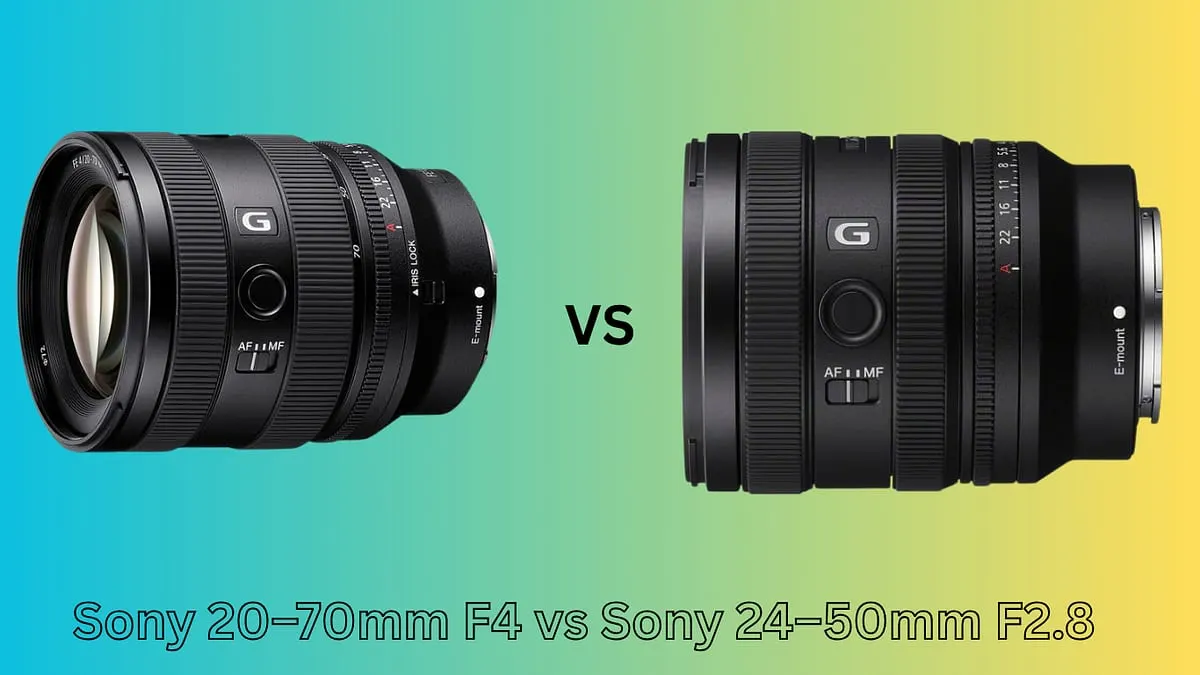
Sony 20–70mm F4 vs 24–50mm F2.8
Sony 20–70mm F4 vs 24–50mm F2.8: key differences in sharpness, autofocus, build and price, and which one suits you.
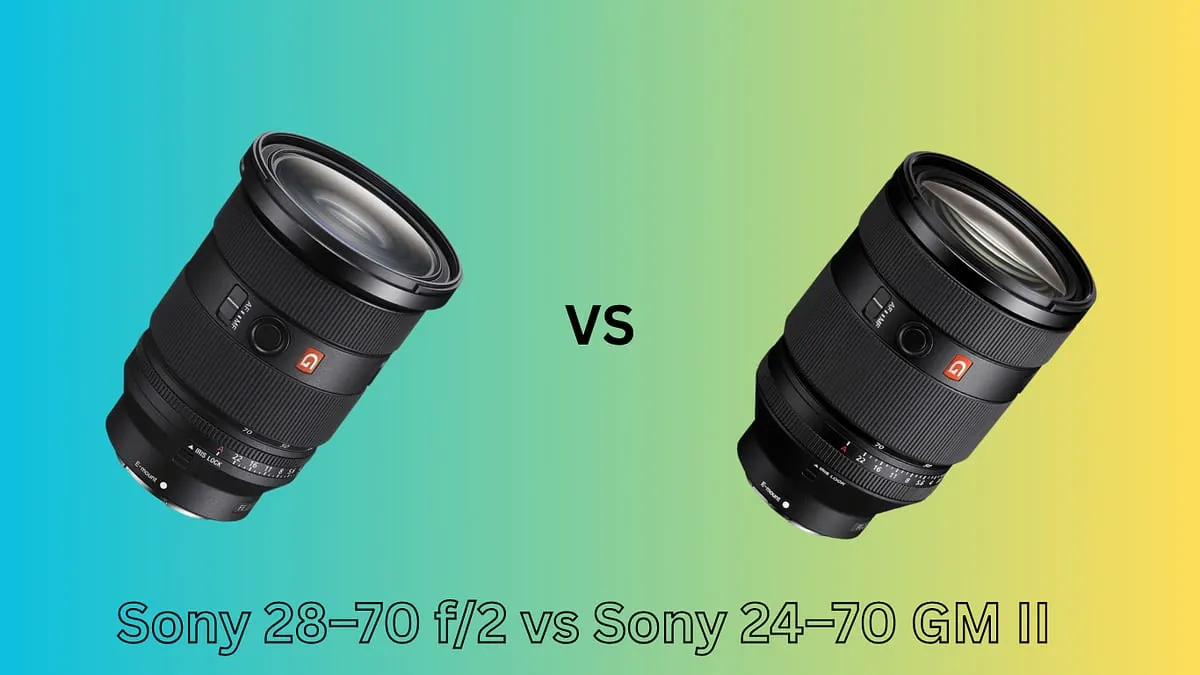
Sony 28–70 f/2 vs Sony 24–70 GM II
Sony 28–70 f/2 vs Sony 24–70 GM II: key differences in specs, autofocus, video and price, and which one suits you.
Top 3 Mirrorless Cameras: Canon R6 II, Panasonic S5 II and Nikon Z30
Top 3 Mirrorless Cameras: Canon R6 II, Panasonic S5 II and Nikon Z30: key features, strengths, drawbacks and who should buy the Canon EOS R6 Mark II.