Best Cameras for Photography
As an Amazon Associate we earn from qualifying purchases. Some links in this guide are affiliate links — see our affiliate disclosure for details.
Short answer: Which camera is best for photography?
The Sony a7 IV is the best overall pick in this guide for most photographers, the Canon EOS M50 Mark II is the beginner pick, the Canon EOS R5 is the professional pick, the Fujifilm X-T5 suits travel, and the Sony FX3 is the choice for video. The right camera depends on budget, what you shoot, how much you carry and which lens system you prefer, so use the checklist below before buying.
Affiliate note: This post has affiliate links. If you buy through them, the site may earn a small commission at no extra cost to you.
What to look for in a camera
If you are just starting in photography, it can be tough to know what matters. Keep these points in mind:
- Budget. Cameras range from a few hundred to several thousand dollars. Set a budget that includes at least one good lens.
- Sensor size. A larger sensor generally gives better image quality, especially in low light.
- Megapixels. More megapixels means more detail for cropping and large prints, but also bigger files.
- Lenses. The lens matters as much as the body. A good lens makes a bigger difference to image quality.
- Features. Image stabilization, autofocus, Wi-Fi and video options are helpful but not always essential.
Best cameras for photography
| Category | Camera | Why |
|---|---|---|
| Best overall | Sony a7 IV | 33 MP full frame, strong autofocus and balanced features |
| Best for beginners | Canon EOS M50 Mark II | Small, easy to use and affordable |
| Best for professionals | Canon EOS R5 | 45 MP full frame with fast bursts |
| Best for travel | Fujifilm X-T5 | 40 MP APS-C with stabilization in a light body |
| Best for video | Sony FX3 | Cinema Line camera with a 12 MP full-frame sensor |
The specifications come from the makers' published information; check each page for current features and pricing.
How do the five compare?
| Camera | Sensor | Notes |
|---|---|---|
| Sony a7 IV | 33 MP full frame | 10 fps, 5-axis stabilization, 4K60 with a crop |
| Canon EOS M50 Mark II | 24.1 MP APS-C | Small body with a viewfinder and vari-angle screen; older model with 4K at 24p and a crop |
| Canon EOS R5 | 45 MP full frame | 20 fps electronic shutter, 8K video, in-body stabilization |
| Fujifilm X-T5 | 40 MP APS-C | Physical dials, stabilization, film simulations, about 557 g |
| Sony FX3 | 12.1 MP full frame | Built for video with active cooling, 4K up to 120p |
How to choose
- Pick the use first. Portraits, sports, travel and video need different strengths.
- Pick the system. Lenses last longer than bodies, so check the lens range and prices.
- Decide on size. A smaller camera gets used more, and a bigger body handles large lenses better.
- Consider used. A used body often offers more for the same budget.
- Handle it. If possible, hold the camera in a shop to check the fit.
Related guides
- Best digital cameras for the main camera types
- The best digital camera pick for the Fujifilm X-T5
- Best mirrorless cameras for a current list
- Best camera for a beginner photographer for first cameras
- Best camera for professional photography for working photographers
Conclusion
Choosing a camera is a personal decision, and there is no one-size-fits-all answer. The best camera depends on individual needs and budget, and a few well-chosen lenses will matter more than small differences between bodies.
Frequently asked questions
Is mirrorless better than DSLR? Mirrorless cameras are smaller and are where new lenses are being developed, so they are the better long-term choice.
How many megapixels do I need? 20 to 26 megapixels is enough for most uses. Go higher for large prints and heavy cropping.
Should I buy the camera body or a kit? A kit with a standard zoom is usually good value for a first camera.
Do I need full frame? Not for most uses. APS-C cameras give excellent results and cost less.
Written by
Marien CartelProfessional and Certified Digital Photographer born in the USA, with 22 years of experience in the field of photography.
Related Guides
Best Mirrorless Camera for Sports Photography
The guide lists the Sony a9 III, Sony a9 II, Canon EOS R3, Nikon Z 9 and OM System OM-1 Mark II, with the key features to consider for sports.
Best Nikon Mirrorless Camera
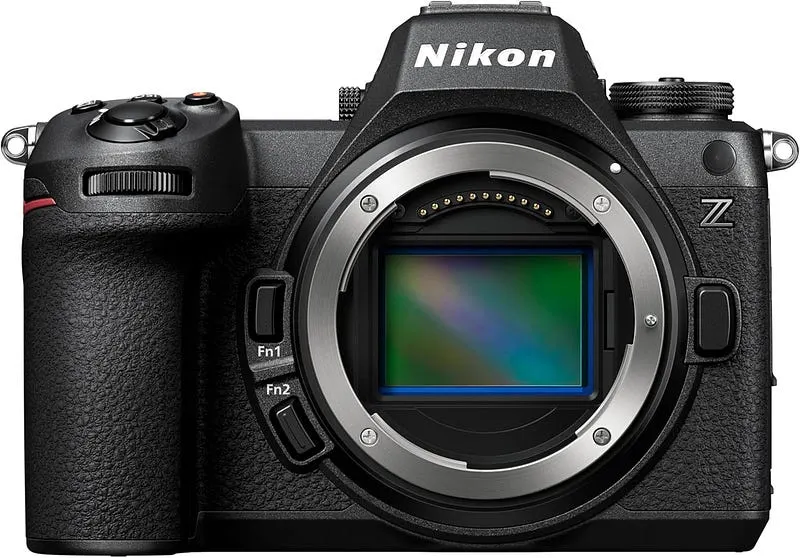
The guide's pick is the Nikon Z6 III. It covers its partially stacked CMOS sensor, autofocus, video features, electronic viewfinder, and its stability and.
What camera do you use for travel photography?
The guide's main camera is the Sony A7C, and it describes a full travel kit including a Peak Design Everyday Backpack.
Best Camera For Long Exposure Photography
Best Camera For Long Exposure Photography: Canon EOS 5D Mark IV, Nikon Z6 and Sony Alpha a7 III compared on features, price and who each one suits.
Best Camera for Wedding Photography
Best Camera for Wedding Photography — how Canon EOS R5, Nikon Z6 II and Fujifilm X-T4 compare on features and price, and who each is best for.
6 Best DSLR Camera for Outdoor Photography: (Guide & Reviews)
Best DSLR Camera for Outdoor Photography — how Nikon D850, Canon EOS 5DS R and Canon EOS 5D Mark IV compare on features and price, and who each is best for.