Best Affordable Compact Camera for Travel in 2026 (Under $500)

As an Amazon Associate we earn from qualifying purchases. Some links in this guide are affiliate links — see our affiliate disclosure for details.
Short answer: Which compact camera is best for travel under $500?
The guide's featured pick is the Fujifilm XF10, with a quick comparison of other budget travel cameras. It also explains where a phone still wins and when a compact camera is the wrong answer.
Remember that sinking feeling? Standing at the edge of a breathtaking Balinese temple complex at golden hour, phone camera raised — only to be utterly disappointed. The vibrant oranges bled into mush, the intricate carvings lost all detail, and the low light turned everything grainy.
- Truly compact — fits in a jacket pocket, not a bag.
- Affordable — under $500 new, or $250–$350 used.
- Noticeably better than a phone — especially in low light and detail.
- Simple, not menu-heavy — fun to use on the go.
Quick Comparison: Best Budget Travel Cameras (2026)
| Camera | Sensor | Lens | Used price | Best for |
|---|---|---|---|---|
| Fujifilm XF10 | APS-C | 28mm f/2.8 fixed | $250–$350 | Pocketability + image quality |
| Sony RX100 III/IV/V | 1-inch | 24–70mm zoom | $300–$450 | Versatility, fast autofocus |
| Ricoh GR III | APS-C | 28mm f/2.8 fixed | $600–$750 | Street photography purists |
| Canon PowerShot G9 X Mark II | 1-inch | 28–84mm zoom | $250–$400 | Slimmest everyday carry |
| Panasonic Lumix LX10 | 1-inch | 24–72mm f/1.4–2.8 | $350–$500 | Low-light zoom flexibility |
One honest note on that table: the Ricoh GR III is listed at $600–$750, which is over the $500 this article promises. It's there because it's the camera people ask about next, not because it fits the budget.
The Hidden Gem: Fujifilm XF10
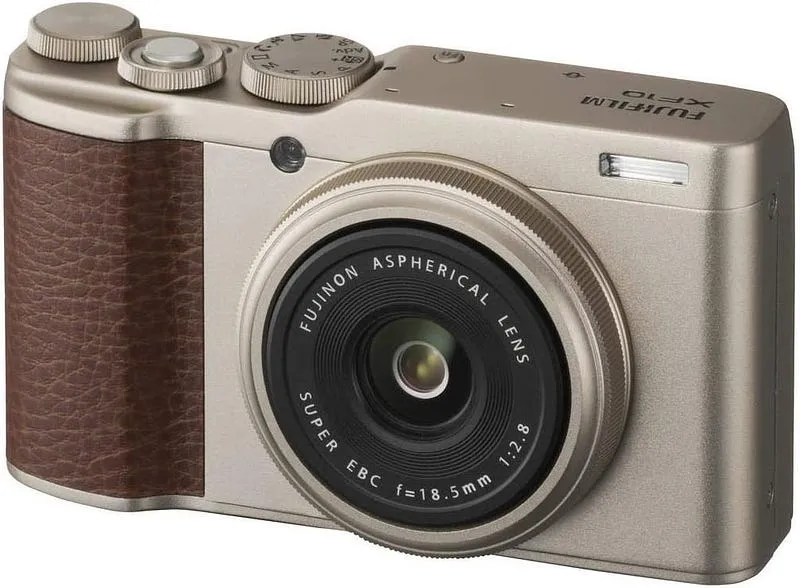
The camera that keeps coming up in forum threads as a “hidden gem” is the Fujifilm XF10.
- The sensor — An APS-C sensor, the same size found in entry-level DSLRs. This is roughly 10–15x larger than a smartphone sensor, meaning real low-light performance and natural background blur, not the software-faked kind.
- The lens — A sharp 28mm-equivalent f/2.8 prime. No zoom forces better composition — you “zoom with your feet.”
- Fujifilm’s color science — Film simulations like Classic Chrome and Acros produce beautiful JPEGs straight out of camera. Less editing, more time enjoying the trip.
- Size and price — It genuinely fits in a jeans pocket, and a clean used copy is easy to find well within budget.
- Build quality — Metal body, tactile controls. It feels like a tool, not a toy.
Putting It to the Test: A Trip to Kyoto
- Gion at dusk — the larger sensor handled dim, lantern-lit streets beautifully.
- Arashiyama Bamboo Grove — the 28mm lens and Classic Chrome simulation gave the greens a lush, filmic quality.
- Kiyomizu-dera overlook — dynamic range held up across bright sky and shadowed rooftops, something phone sensors still struggle with.
- Everyday moments — street food, candid portraits, quick temple details — always ready, never obtrusive.
The honest downsides:
- Autofocus is decent, not fast — moving subjects can challenge it.
- No viewfinder, so bright-sun composing takes practice.
- Battery life is average — carry a spare.
- Fixed lens means no zoom, ever. That’s a real trade-off, not a small one.
Is the XF10 Still Worth It in 2026?
New units are impossible to find since it was discontinued — but the used market is exactly where this camera shines, and $250–$350 remains genuinely affordable. It’s still arguably the smallest camera on the market with an APS-C sensor.
If you want more flexibility, here are the other contenders worth your money:
- Sony RX100 Series (III–V): More zoom range (24–70mm), faster autofocus, better video. Smaller sensor than the XF10 but still miles ahead of a phone. Great used buys.
- Canon PowerShot G9 X Mark II: The slimmest option here, 1-inch sensor, simple touchscreen — a natural step up from a phone.
- Panasonic Lumix LX10: Larger 1-inch sensor, fast f/1.4 lens, full manual controls — slightly bulkier but excellent in low light.
- Ricoh GR III: If budget stretches a bit further, this is the enthusiast’s pick for street and travel photography — APS-C sensor in an even smaller body than the XF10.
The Verdict
A dedicated compact camera — even an affordable used one — changes how you shoot. It’s not about heavier gear; it’s about a tool that disappears into your trip while capturing images your phone simply can’t.
- Tightest budget, want pocketability + real image quality → used Fujifilm XF10.
- Want zoom flexibility and speed → used Sony RX100 III/IV/V.
- Willing to spend a bit more for the best street/travel compact today → Ricoh GR III.
Where the phone actually wins
It would be dishonest to write this in 2026 and pretend the phone has no case. It has three, and they're real.
Good light. In bright conditions a current flagship phone, stacking a dozen frames computationally, will produce a cleaner and more contrasty JPEG than a 1-inch compact. The sensor is smaller; the software more than makes up for it.
Ultra-wide. Most compacts here start at 24mm or 28mm. Phones go to 13mm equivalent. If you shoot interiors or tight streets, the phone genuinely does something these cameras can't.
It's already in your pocket. The best camera argument ever made, and it never stops being true.
Where the compact pulls ahead is narrower than the marketing suggests, and worth being specific about: low light with a larger sensor, real optical zoom reach, natural background separation rather than a computed mask (phones still betray themselves at the edges of hair and glasses), and the experience of shooting with controls instead of a screen. That last one is not a spec and it's the reason most people who buy one keep using it.
When a compact is the wrong answer
Here is where a compact stops making sense.
| If you | Then |
|---|---|
| Want to photograph wildlife or sport | A compact is the wrong tool. You need reach, and that means an interchangeable lens |
| Shoot paid work | One card slot and a fixed lens are not a professional kit |
| Want shallow portrait backgrounds | A 1-inch sensor won't give you that. APS-C with a fast prime will |
| Already carry a mirrorless body | A small prime on what you own beats buying a second camera |
| Mostly post to Instagram from your phone | Be honest about whether the transfer step will actually happen |
The case for a compact is specifically the traveller who finds a system camera too heavy or too conspicuous to keep taking out — and for that person it's a genuinely good answer. For anyone else, the money usually goes further elsewhere. If that's you, affordable mirrorless cameras for travel is the more honest place to start.
Buying used without getting burned
Most of the value in this category is on the used market, so it's worth knowing what to check. Four things, in order:
- Shutter count. Ask for it. Compacts tend to be lightly used, so anything under 10,000 is barely broken in. A seller who won't tell you is telling you something.
- Photograph the lens elements against a light. You're looking for fungus — fine branching threads inside the glass — and for scratches. Fungus spreads and cannot be cleaned out cheaply.
- Check the lens extends and retracts smoothly. A compact's collapsing lens mechanism is its most common failure, and grit from a beach trip kills it.
- Buy from somewhere that inspects. MPB, KEH and Adorama grade their stock and include a short warranty, usually for 10–20% more than a private sale. On a $300 camera that's cheap insurance.
Related reading
If you're still narrowing things down, these cover the neighbouring questions:
- Best compact cameras — the wider field, not only the under-$500 end
- Best compact camera for low light — if dusk and interiors are your problem
- Best APS-C compact camera — the larger-sensor options in detail
- Ricoh GR III vs Fujifilm X100VI — if the budget has stretched
- Canon PowerShot V1 vs G7 X Mark III — the current Canon compacts
Frequently asked questions
Is a compact camera really better than the latest iPhone or Samsung?
High-end phones use software to fake a professional look, but they can’t beat physics. A camera like the Fujifilm XF10 has an APS-C sensor roughly 10–15x larger than a smartphone’s, meaning more real detail, better low light, and natural — not artificial — background blur.
I’m used to zooming on my phone. Won’t a fixed lens be frustrating?
It’s a different way of shooting. With a fixed 28mm lens, you “zoom with your feet.” It’s ideal for landscapes, street photography, and travel-companion shots, and it genuinely makes you think more about composition.
Where’s the best place to buy these used in 2026?
Reputable retailers like MPB, KEH, and Adorama inspect gear and often include a short warranty. If buying on eBay or Facebook Marketplace, always ask for the shutter count and photos of the lens elements to check for scratches or fungus.
Do I need to know manual mode to enjoy these cameras?
Not at all. Fujifilm’s Film Simulations let you shoot in Auto or Program mode, pick a look like Classic Chrome, and get a beautiful, ready-to-share photo with zero editing.
How do I get photos from the camera to my phone?
Most of these cameras, including the XF10 and current Sony/Canon compacts, have built-in Wi-Fi or Bluetooth. Download the manufacturer’s companion app and transfer your favorites in seconds from a café or train.









Written by
Marien CartelProfessional and Certified Digital Photographer born in the USA, with 22 years of experience in the field of photography.
Related Guides

Best Affordable Mirrorless Camera for Travel
Best Affordable Mirrorless Camera for Travel: Canon EOS R50, Canon EOS R100 and Sony Alpha a6000 compared on features, price and who each one suits.

Best Affordable Camera for Travel
Best Affordable Camera for Travel: a side-by-side look at Canon EOS R50, Sony ZV-E10 and Canon EOS R100, with strengths, trade-offs and buying advice.
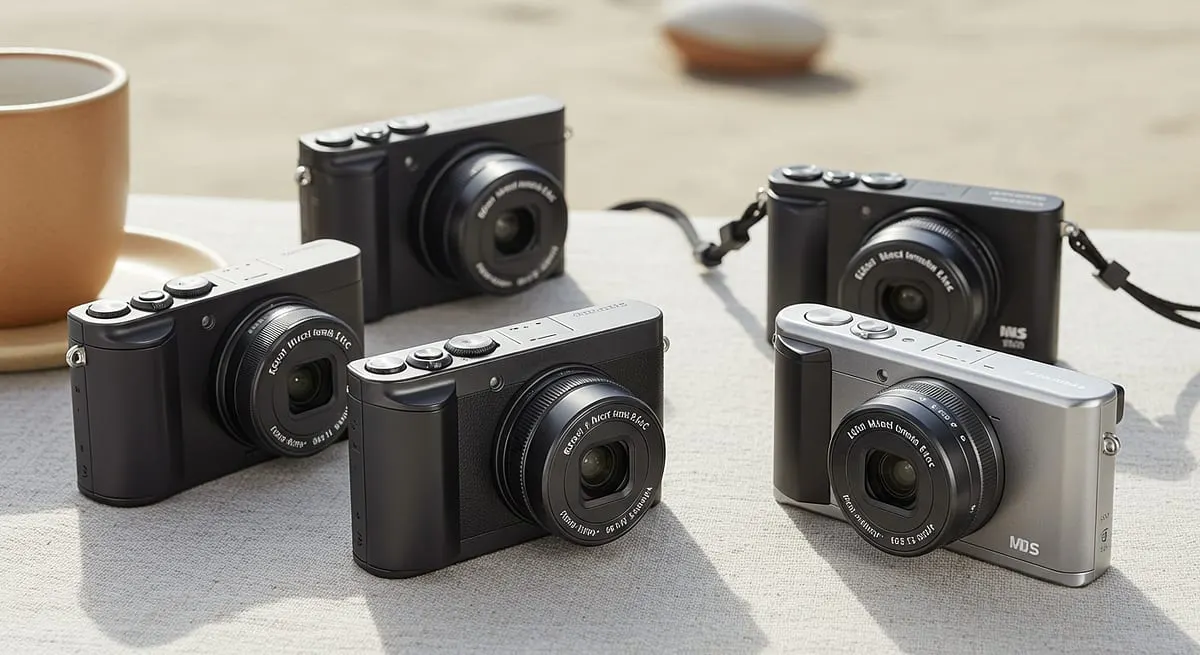
Best Compact Cameras for Travel: A Personal Journey
Best Compact Cameras for Travel — Sony RX100 VII, Canon PowerShot G7 X Mark and Panasonic Lumix LX100 II compared, with pros, cons and who should buy which.

Best Compact Cameras in 2026
Best Compact Cameras in 2026 — how Sony RX100 VII, Fujifilm X100VI and Canon PowerShot G7 X Mark compare on features and price, and who each is best for.
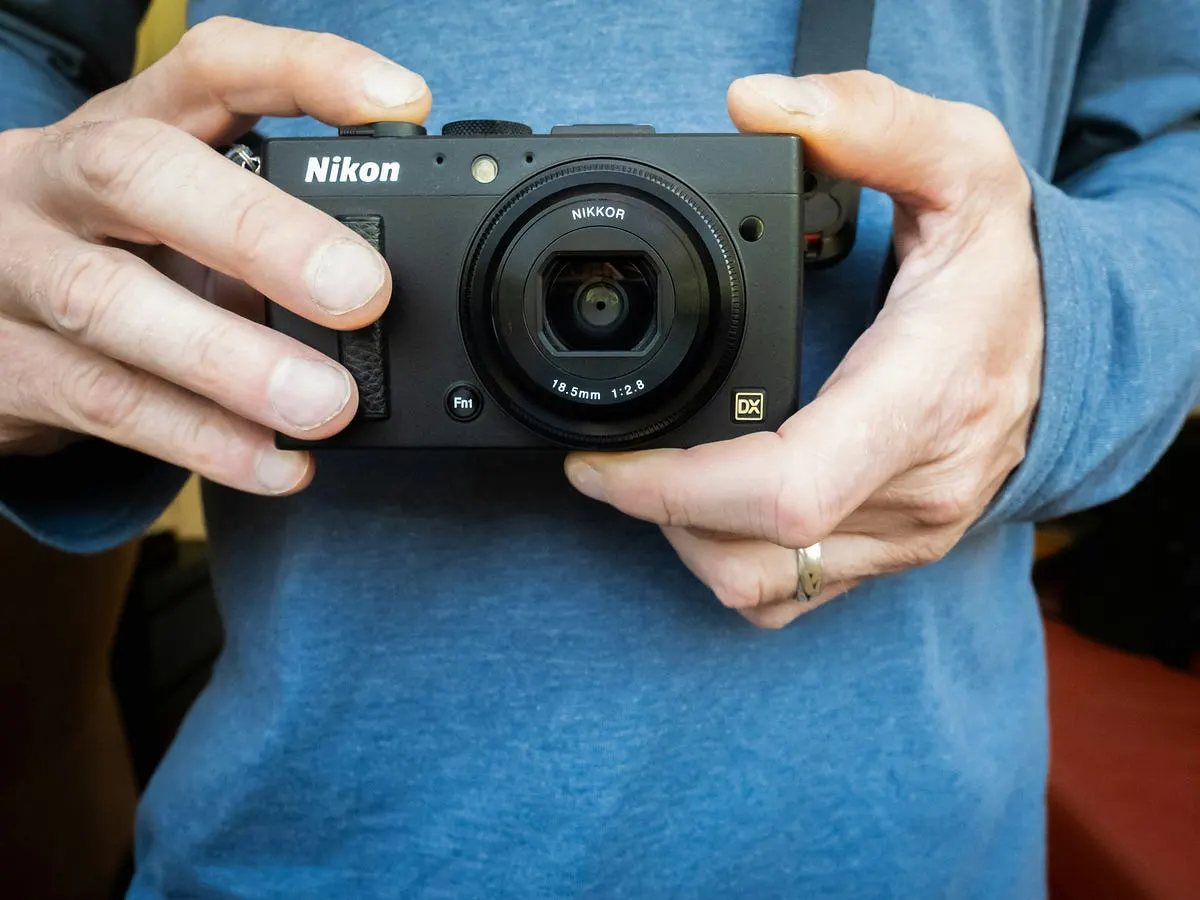
Best Point and Shoot Camera of 2026: Expert Picks for Every Budget
Best Point and Shoot Camera of 2026: Expert Picks for Every Budget: key features, strengths, drawbacks and who should buy the Sony Cyber-shot RX100 VII.
Best Affordable Point And Shoot Digital Camera
Best Affordable Point And Shoot Digital Camera — what the Canon PowerShot G7 X Mark offers, where it falls short, and whether it is worth buying.