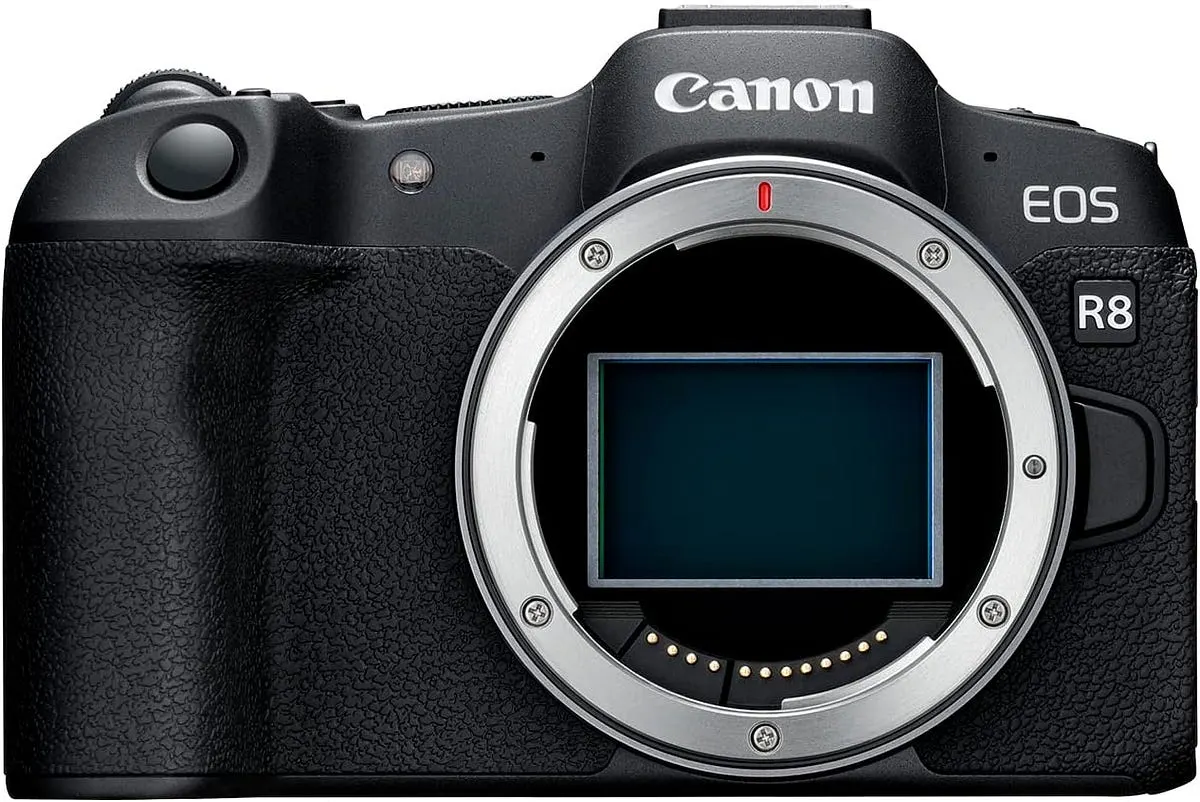
Canon R8 Review
As an Amazon Associate we earn from qualifying purchases. Some links in this guide are affiliate links — see our affiliate disclosure for details.
I recently had the opportunity to test the Canon EOS R8, a camera that caught my attention for its blend of performance and affordability. My journey with photography began several years ago when I first picked up a DSLR, and since then, I’ve explored various cameras and lenses, always in search of the perfect balance between quality and usability. The EOS R8, priced around $1,500 USD, intrigued me as it seemed to promise a lot for its cost.
Personal Experience with the Canon EOS R8
Initial Impressions
Upon receiving the EOS R8, I was immediately struck by its compact design. Weighing just one pound, it felt surprisingly lightweight yet sturdy in my hands. As someone who has previously used bulkier models, this was a refreshing change. The grip was comfortable, even during extended shooting sessions, which is crucial for my style of photography that often involves long hours at events or outdoor shoots.
Strengths of the Camera
The 24.2MP full-frame sensor and Dual Pixel CMOS AF II autofocus system were standout features for me. These specifications are inherited from the more advanced EOS R6 MK II, which I had admired but found too expensive for my needs. The autofocus performance was exceptional; I found it particularly effective during a recent portrait session where I needed to capture fast-moving subjects. The camera tracked faces effortlessly, allowing me to focus on composition rather than technical adjustments.
Video Capabilities
One of my passions is videography, and the EOS R8’s ability to shoot 4K video at 60fps was a significant draw. During a recent project documenting local events, I utilized this feature extensively. The video quality was impressive, although I did miss having in-body image stabilization (IBIS), which would have been beneficial for handheld shots. Instead, I relied on lens stabilization and digital IS for video recording, which worked reasonably well but did result in some cropping.
Ergonomics and Usability
As someone with larger hands, I appreciated how Canon designed the EOS R8 to be ergonomic without compromising functionality. The layout of buttons and dials felt intuitive; however, I found myself missing a dedicated joystick for easier navigation through menus and settings. Instead, I used the touchscreen interface extensively, which was responsive and user-friendly.
Limitations Faced
Despite its strengths, there are limitations that I encountered. The absence of IBIS was noticeable during certain shooting scenarios where stability is paramount. Additionally, the single SD card slot posed a challenge; I’ve learned from experience that having dual slots is invaluable during critical shoots to avoid any potential mishaps.
Conclusion
Overall, my experience with the Canon EOS R8 has been largely positive. It combines an excellent sensor with robust autofocus capabilities in a lightweight body — ideal for both photography and videography enthusiasts like myself who seek quality without breaking the bank.
While there are compromises due to its budget-friendly nature — such as the lack of IBIS and fewer customization options — the camera still delivers impressive performance that can satisfy both amateur and semi-professional photographers.
In conclusion, if you’re looking for an entry-level full-frame mirrorless camera that doesn’t skimp on features or performance, the Canon EOS R8 is definitely worth considering. It has rekindled my excitement for photography and inspired me to explore new creative avenues with its versatile capabilities.

Photo by Pacto Visual on Unsplash

Photo by John Cameron on Unsplash

Written by
Marien CartelProfessional and Certified Digital Photographer born in the USA, with 22 years of experience in the field of photography.
Related Guides
Nikon Z8 Review
A Professional Photographer’s Comprehensive Review — my picks are the Nikon Z8, Canon EOS R5 and Sony a1, with the honest trade-offs of each.
Nikon Zf vs Fujifilm X100VI
The Tactile Dilemma: Why the Fujifilm X100VI and Nikon Zf Forced Me to Rethink Everything
Ricoh GR III vs Fujifilm X100VI
The Camera I Almost Didn’t Buy, and the One I Almost Returned: the Fujifilm X100VI and Ricoh GR III side by side, and the one I would pick myself.