Best Budget Action Camera
As an Amazon Associate we earn from qualifying purchases. Some links in this guide are affiliate links — see our affiliate disclosure for details.
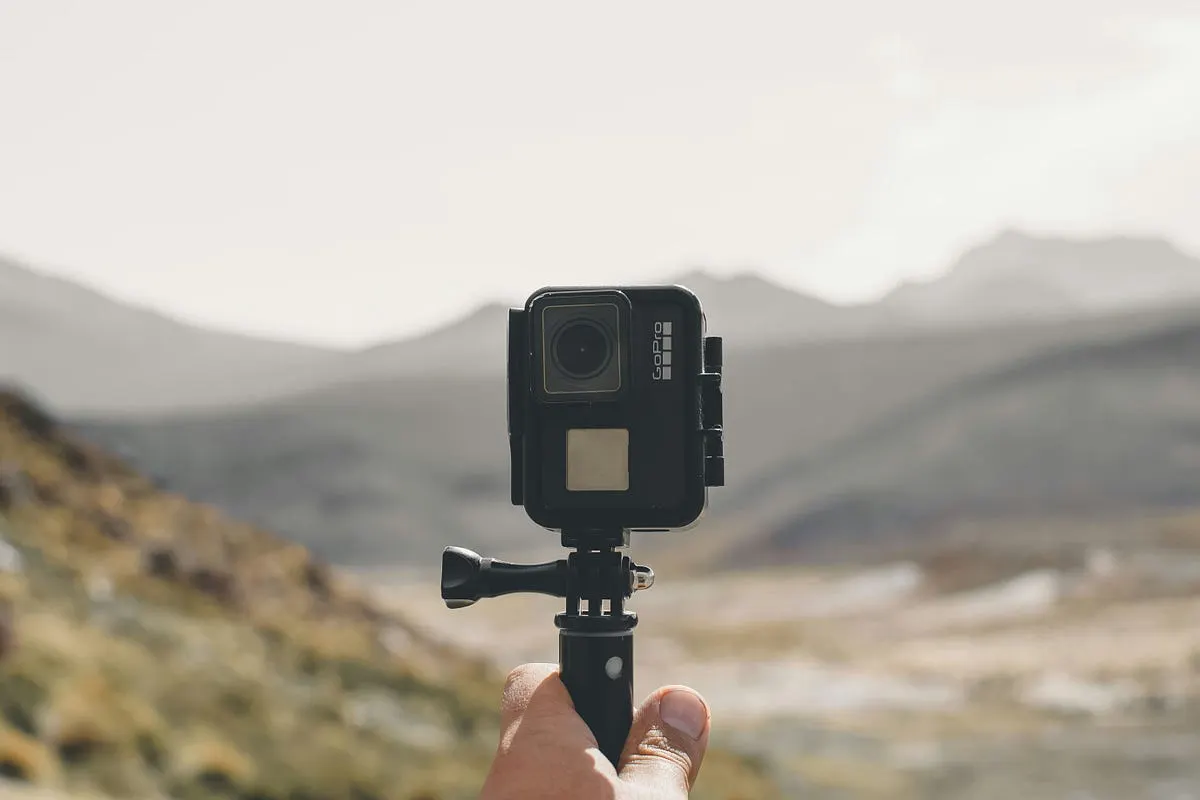
Photo by Franco Salcedo on Unsplash
- GoPro Hero 12 Black — View on Amazon
- DJI Osmo Action 5 Pro — View on Amazon
Affiliate note: This post has affiliate links. If you buy through them, I might earn a small commission (at no extra cost).
Quick answer: which budget action camera should you buy?
- Best for most people: the GoPro Hero 12 Black. Proven stabilization, a 10 m waterproof rating without a case, and the largest mount and accessory ecosystem of any action camera.
- Best if you can spend a little more: the DJI Osmo Action 5 Pro. A larger 1/1.3-inch sensor, a 20 m waterproof rating, about 4 hours of rated battery life and 47GB of built-in storage.
- What to avoid: unbranded cameras under roughly $60 that advertise "4K" and "professional stabilization." Stabilization, waterproofing and battery life are the first things cut at that price, and they are the features that matter most.
Prices move fast (older flagships drop soon after a new model launches), so check the current price before you decide. The rest of this guide explains why, compares the two cameras side by side, and shows what to expect at each budget.
The Lake That Exposed the Problem
Stabilization especially isn’t a feature you can fake convincingly at the bottom of the market — either the processing behind it works, or your footage is unusable.
What Actually Separates a Good Budget Action Camera From a Bad One
Stabilization that survives real motion, not just gentle handheld tests. Kayaking, biking, hiking with elevation changes — real-world footage is far bumpier than the smooth demo clips brands show off. Weak stabilization ruins footage fast.
Waterproofing that’s actually rated, not just claimed. An IP rating from a real manufacturer means something. A vague “water-resistant” claim on a no-name product often doesn’t hold up past a light splash.
Battery life that survives a full activity, not just a quick test clip. Cheap sensors and processors often burn through battery fast specifically because they’re working harder to compensate for lower-quality components.
Mounting compatibility with an established accessory ecosystem. This matters more than people expect. A camera that only works with its own proprietary, hard-to-find mounts becomes frustrating fast once you actually want to attach it to a helmet, bike, or chest strap.
The Camera That Actually Fixed It
It’s technically the previous flagship generation now, which is exactly why it’s become such a strong budget pick — GoPro’s stabilization technology and rugged waterproof build, at a noticeably lower price than the current top-tier model. Stable, clean, properly exposed footage, with a battery that actually lasted the whole afternoon.
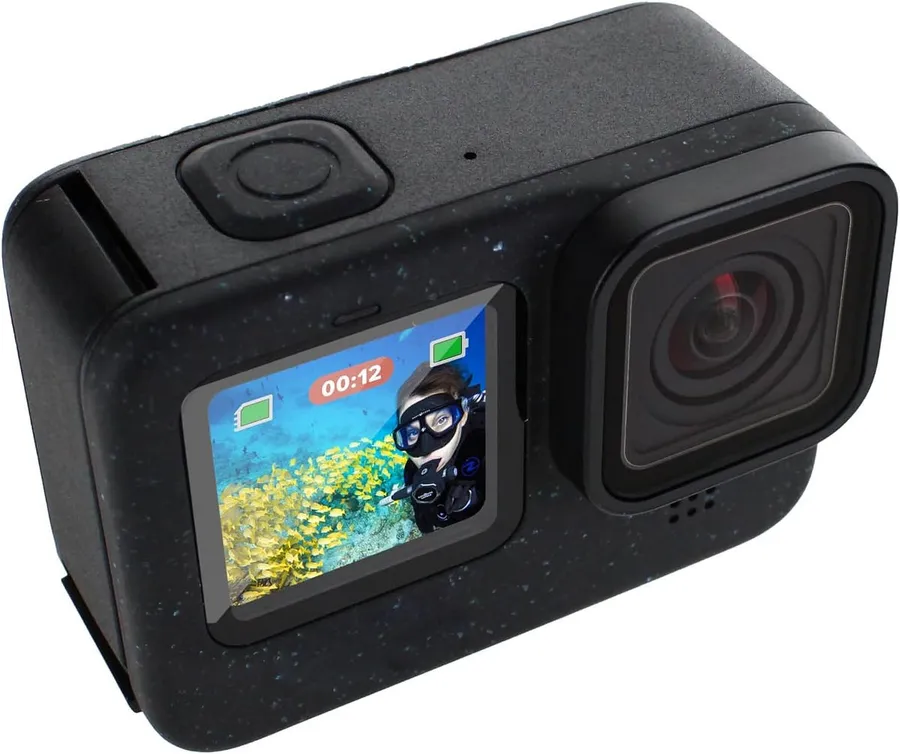
Capture every moment with the HERO12 Black! Perfect for adventure and everyday use!
GoPro Hero 12 Black — View on Amazon
The DJI Osmo Action 5 Pro sits at a slightly higher price point than a budget pick strictly speaking, but it is worth mentioning because DJI has priced it aggressively against GoPro’s current flagship — meaning you get genuinely excellent stabilization, a bigger sensor, and notably longer battery life for less than GoPro’s newest model costs, even if it’s not quite “bargain bin” pricing.
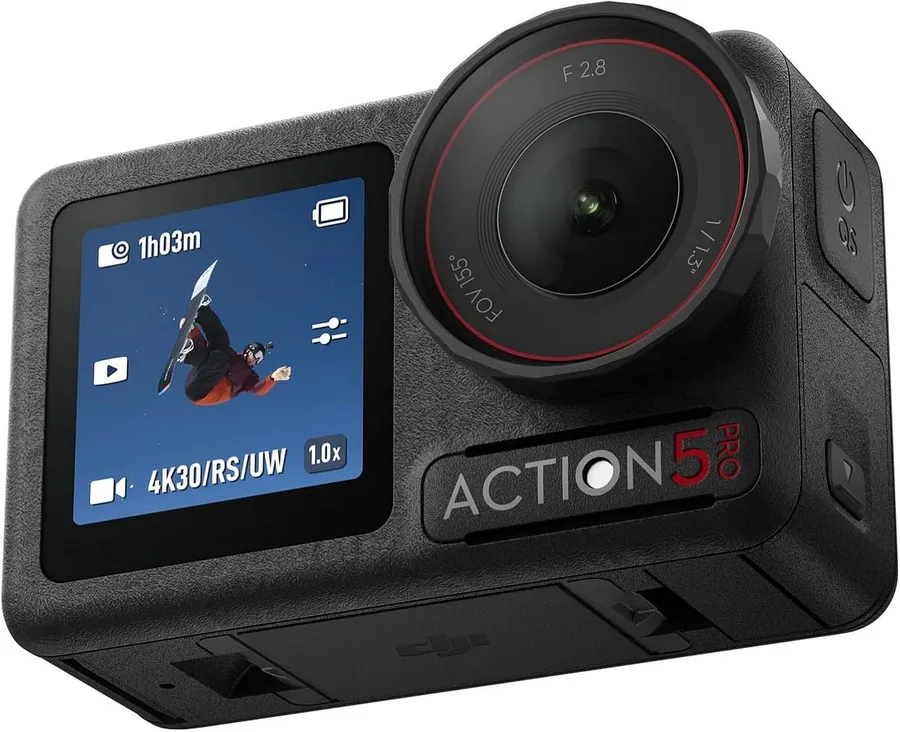
DJI Osmo Action 5 Pro — View on Amazon
Key takeaways
It wasn’t the category. It was the specific corner-cutting that happens when a product is priced low enough that stabilization processing, waterproofing quality, and battery capacity all get quietly sacrificed to hit that price point.
GoPro Hero 12 Black vs DJI Osmo Action 5 Pro: specs side by side
Both cameras are covered above, but the differences are easier to see in one place. These are the manufacturers' published figures; real-world battery life is lower in the cold and at high frame rates.
| Spec | GoPro Hero 12 Black | DJI Osmo Action 5 Pro |
|---|---|---|
| Sensor | 1/1.9-inch | 1/1.3-inch |
| Top video modes | 5.3K at 60 fps, 4K at 120 fps | 4K at 120 fps |
| Photo resolution | 27 MP | 40 MP |
| Stabilization | HyperSmooth 6.0 | RockSteady 3.0 with horizon leveling |
| Waterproof without a case | 10 m | 20 m |
| Battery | 1,720 mAh (about 2.5 hours rated) | 1,950 mAh (about 4 hours rated) |
| Built-in storage | None (microSD card) | 47 GB plus a microSD slot |
| Typical list price | About $249 | About $349 |
The list prices are what the manufacturers have published at the time of writing; street prices vary by retailer and sale. Specs compiled from the manufacturers' figures and comparison pages such as Versus and CameraDecision; confirm the details on the product page before you buy.
How to read the table. The sensor is the biggest practical difference. A larger sensor gathers more light, which is why the Osmo Action 5 Pro tends to look cleaner at dusk, in forests and indoors. The Hero 12 Black counters with a higher top resolution, the more mature accessory ecosystem and a lower price. Battery life and built-in storage are where the DJI pulls ahead most clearly, and both matter on a full day out.
One more thing worth knowing: GoPro and DJI have both released newer flagships since these two (the GoPro Hero 13 Black and the DJI Osmo Action 6). That is part of why the Hero 12 Black and Osmo Action 5 Pro are good value now. Older generations usually keep most of what made them good and lose a chunk of their price.
What you actually get at each budget
"Budget" means very different things depending on the number. This is what to realistically expect:
| Budget (approx.) | What to expect | What to watch for |
|---|---|---|
| Under $70 | Basic 4K-labelled video, a plastic waterproof housing, and a bundle of mounts. Fine for casual, low-stakes clips on a calm day. | Weak or fake stabilization, housings that fog or leak (exactly what happened on my kayaking trip), soft footage in low light, short battery life. |
| $70 to $150 | Better budget lines from established third-party brands, with more reliable video and a decent accessory kit. | Marketing claims still run ahead of real performance. Look for sample footage with real motion, not a smooth tripod demo. |
| $150 to $300 | Previous-generation flagships from GoPro and DJI, bought after a newer model launches. The Hero 12 Black sits in this range. | Prices swing with sales, so compare a few authorized sellers before buying. |
| $300 and up | Larger sensors, longer battery life and more built-in storage, such as the Osmo Action 5 Pro. | Newer launches keep pushing these prices down, so waiting a few months can save real money. |
If you want one rule: spend as much as you can on a proven brand's older flagship rather than the newest unproven camera at the same price. It is the same logic as the "previous-generation flagship" answer in the FAQ below.
Which camera fits your activity?
- Kayaking, snorkeling, rain and splashes: waterproofing and a sealed door matter most. Both cameras here are rated waterproof without a case, and a cheap camera with a vague "water-resistant" label is the one that fogs up.
- Cycling or a motorcycle helmet: stabilization and secure mounts decide the footage. The GoPro's huge mount ecosystem is a real advantage, and our guide to the best camera for a motorcycle helmet covers that use in more detail.
- Hiking and travel days: battery life and weight matter. The Osmo Action 5 Pro's longer rated battery and built-in storage help on a long day, and a spare battery helps on either camera.
- Dusk, forests, indoors and other low light: a bigger sensor helps, which favors the Osmo Action 5 Pro.
- Talking to camera or vlogging: an action camera is not always the right tool. See the best budget vlogging cameras and the best camera for vlogs.
- Filming sports from the sideline: an action camera is a poor fit for distant subjects. A camcorder or mirrorless camera does better, as covered in the best camcorder for sports.
- Adventure stills as well as video: if photos matter as much as clips, our list of the best cameras for adventure photography is a better starting point.
- GoPro-specific questions: the best GoPro guide goes through the GoPro lineup in more depth.
Mistakes to avoid when buying a budget action camera
- Trusting the resolution number. "4K" on a box says nothing about the sensor, the processing or the stabilization. Two cameras can both record 4K and look completely different.
- Buying on stabilization claims alone. Look for sample footage shot with real motion: cycling, paddling, walking downhill. Smooth demo clips prove nothing.
- Ignoring the memory card. Action cameras write a lot of data quickly. Use a reputable microSD card that meets the camera maker's recommended speed class (usually UHS-I U3 / V30 or better), or recording can stop or stutter.
- Skipping a spare battery. A second battery is the cheapest way to double your shooting time, and it matters more than a higher resolution mode.
- Treating "waterproof" as "maintenance-free." Keep the door seal clean, check it before every swim, and rinse the camera in fresh water after salt water.
- Buying from an unknown marketplace seller. Counterfeit accessories, gray-market imports and missing warranties are common with no-name sellers. Buy from an authorized retailer with a clear return policy.
Accessories that matter more than the camera body
A few inexpensive extras make a bigger difference to your footage than upgrading the camera: a spare battery, a fast microSD card, a floating handle if you shoot on or near water, a secure helmet or handlebar mount, and a lens protector. Buy these before you chase a more expensive body.
Frequently asked questions
Are cheap unbranded action cameras ever worth buying?
Occasionally, for extremely casual, low-stakes use — but stabilization, waterproofing, and battery reliability tend to be the first things cut on unbranded budget cameras, and those are exactly the features that matter most for actual action sports use.
Do I need 5K or higher resolution for action footage?
Not necessarily. 4K is genuinely sufficient for most social media and personal use; the resolution matters less than stabilization quality and dynamic range in fast-changing outdoor light.
How much should I actually budget for a “budget” action camera?
Previous-generation flagship models from established brands, bought at their now-lower price point, consistently outperform brand-new ultra-cheap alternatives at a similar price. Spending slightly more for a proven, older flagship beats spending less on an unproven new budget model almost every time.
Is the GoPro Hero 12 Black still worth buying now that newer models exist?
Yes, if the price is meaningfully lower than the newest model. Newer flagships like the Hero 13 Black are exactly why older ones become good value. Unless you specifically need the newest features, the Hero 12 Black still delivers strong stabilization, a rugged waterproof build and the full accessory ecosystem.
GoPro or DJI for a budget buyer?
The GoPro Hero 12 Black is the safer choice for mounts, accessories and a lower price. The DJI Osmo Action 5 Pro costs more but offers a larger sensor, longer rated battery life, deeper waterproofing and built-in storage. Both are far more reliable than no-name alternatives.
What memory card does an action camera need?
A reputable microSD card that meets the maker's recommended speed class, usually UHS-I U3 / V30 or better for 4K recording. Check the camera's manual for the list of recommended cards, since slow or fake cards are a common cause of recording errors.
Do I need a separate case to use an action camera underwater?
Not for shallow use. The Hero 12 Black is rated to 10 m and the Osmo Action 5 Pro to 20 m without a case. For deeper dives you need a dedicated dive housing, and after any salt water use you should rinse the camera with fresh water.
Can an action camera replace my phone for travel video?
For motion, water, durability and easy mounting, an action camera does things a phone can't. For zoom, convenience, editing and low light, a phone is often better. Many travelers carry both.
Photo by Pietro Mattia on Unsplash
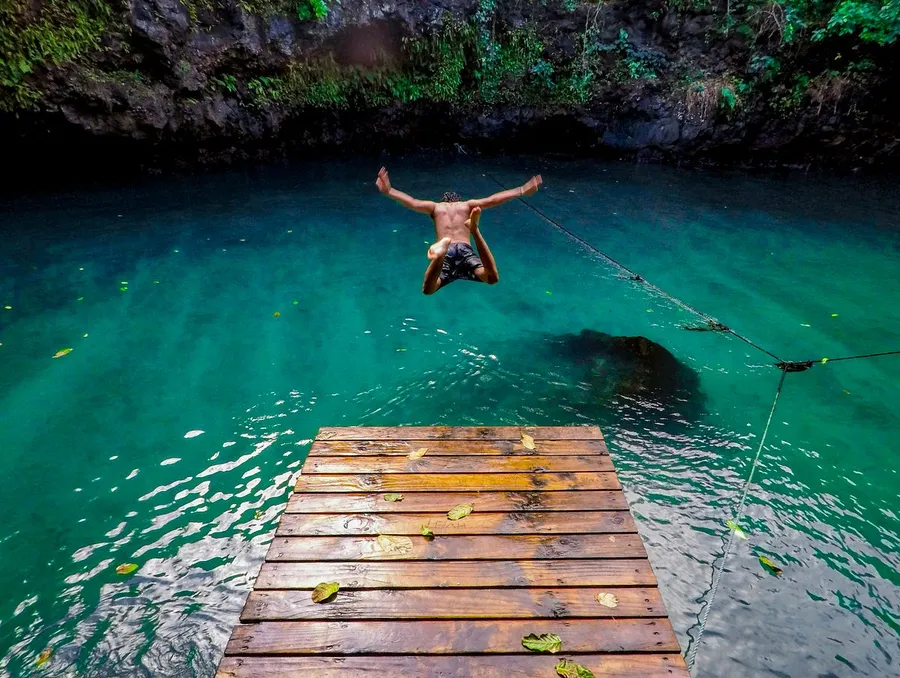
Photo by Ethan Elisara on Unsplash
Photo by Tom Morbey on Unsplash

Written by
Marien CartelProfessional and Certified Digital Photographer born in the USA, with 22 years of experience in the field of photography.
Related Guides
Best camera for tennis match action shots
The guide names the Sony A9 II as best overall, the Canon EOS R6 as best value and the Sony A7 III as the best budget option.

Best Camera for Sports Photography Under $1,000
Best Camera for Sports Photography Under $1,000: Canon EOS M50 Mark II, Nikon D3500 and Canon Rebel T8i compared on features, price and who each one suits.
Best Affordable Point And Shoot Digital Camera
Best Affordable Point And Shoot Digital Camera — what the Canon PowerShot G7 X Mark offers, where it falls short, and whether it is worth buying.

Best Camera for Basketball Games
Best Camera for Basketball Games: Sony A6700, Fujifilm X-H2S and Sony A9 III compared on features, price and who each one suits.

Best Mirrorless Camera for Sports Photography
The guide lists the Sony a9 III, Sony a9 II, Canon EOS R3, Nikon Z 9 and OM System OM-1 Mark II, with the key features to consider for sports.
Best Budget DSLRs
Best Budget DSLRs — how Canon EOS Rebel SL3 and Nikon D3500 compare on features and price, and who each is best for.