Best Lenses for Canon EOS C80
As an Amazon Associate we earn from qualifying purchases. Some links in this guide are affiliate links — see our affiliate disclosure for details.
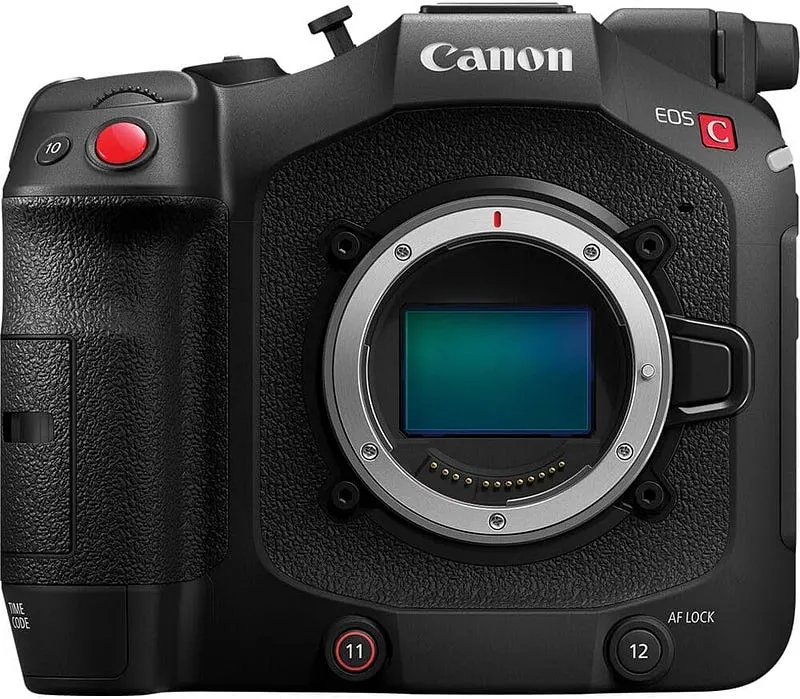
When I first unboxed my Canon EOS C80, I thought my collection of photography lenses would seamlessly transition to filmmaking. How wrong I was. After months of trial, error, and countless hours of research, I’ve discovered that choosing the right glass for the C80 isn’t just about specs — it’s about understanding how cinema differs from photography.
Why the Canon C80 Changed My Perspective on Lenses
Coming from a photography background, I was used to prioritizing sharpness and versatility above all else. But the C80 taught me that filmmaking demands different qualities: smooth focus transitions, minimal breathing, consistent aperture performance, and that elusive cinematic character that separates amateur from professional work.
The C80’s RF mount opened up a world of 79+ native lens options, but more choices meant more confusion. Which lenses would actually serve my filmmaking goals? After extensive testing and real-world use, here’s what I’ve learned.
The RF Mount Advantage
The Canon C80’s RF mount isn’t just a new connector — it’s a complete reimagining of lens-camera communication. The 20mm flange distance (compared to EF’s 44mm) allows for more compact designs and better optical performance. More importantly, RF lenses offer:
- Superior autofocus performance with dual pixel AF
- Full electronic control over aperture, focus, and IS
- Customizable control rings for on-the-fly adjustments
- Metadata transfer for post-production workflows
- Weather sealing when paired with compatible bodies
My Prime Lens Recommendations
After testing dozens of lenses, these primes have become my go-to choices for different scenarios:
For Premium Productions
- Canon RF 35mm f/1.4 L VCM — My wide-angle workhorse for establishing shots
- Canon RF 50mm f/1.2L USM — The portrait king with dreamy bokeh
- Canon RF 85mm f/1.2L USM — Perfect for intimate close-ups and interviews
For Budget-Conscious Creators
- Canon RF 16mm f/2.8 STM — Surprisingly sharp for the price
- Canon RF 35mm f/1.8 IS Macro STM — Versatile with built-in stabilization
- Canon RF 50mm f/1.8 STM — The gateway drug to RF primes
- Canon RF 85mm f/2 Macro IS STM — Macro capabilities with portrait performance
The Third-Party Game Changer: Sigma Art Series
Here’s where I made my biggest discovery. The Sigma Art series in EF mount, adapted to RF, offers cinema-quality optics at photography prices:
- Sigma 14mm f/1.8 Art — Ultra-wide with minimal distortion
- Sigma 24mm f/1.4 Art — My go-to for environmental portraits
- Sigma 35mm f/1.4 Art — Cinematic character with modern sharpness
- Sigma 50mm f/1.4 Art — The perfect balance of speed and quality
- Sigma 85mm f/1.4 Art — Portrait perfection with creamy bokeh
- Sigma 135mm f/1.8 Art — Long lens compression without the weight
Zoom Lenses That Actually Work for Cinema
Zoom lenses for video work need constant aperture performance. After testing Canon’s lineup, these emerged as winners:
Premium Zooms
- Canon RF 15–35mm F2.8 L IS USM — Wide coverage with excellent corner performance
- Canon RF 24–70mm F2.8 L IS USM — The versatile standard with IBIS
- Canon RF 28–70mm f/2L USM — Unique f/2 constant aperture
- Canon RF 70–200mm f/2.8L IS USM — Telephoto compression without compromise
Budget-Friendly Option
- Canon RF 24–105mm f/4L IS USM — One lens to rule them all for run-and-gun situations
The Adapter Question: To Adapt or Not to Adapt?
This was my biggest dilemma. I owned several Canon EF lenses — should I invest in adapters or go fully native RF?
After extensive testing, here’s my take:
When to Use the Canon EF-RF Adapter
The basic Canon EF-RF adapter (Amazon, B&H) is remarkable. It maintains full autofocus, image stabilization, and electronic aperture control. I use it primarily for:
- Sigma Art lenses (best value proposition)
- Canon EF telephoto primes (200mm f/2L, 300mm f/2.8L)
- Specialty lenses I already owned
When to Go Native RF
For projects requiring the absolute best autofocus performance or when using the control ring extensively, native RF is the way to go.
Cinema Lenses: When to Make the Jump
For serious filmmaking, I eventually invested in proper cinema glass. My recommendations:
Full-Frame Cine Primes
- Sigma Cine Lenses (PL Mount) — Exceptional value with T1.5 speeds
- Canon CN-E Prime Series — Native integration with Canon color science
Cine Zoom Lenses
- Canon CN-E 20–50mm T2.4 LF — Wide to normal coverage
- Canon CN-E 45–135mm T2.4 LF — Telephoto reach with consistent performance
My Current Kit Configuration
After all this testing, here’s what’s in my camera bag:
Primary Kit:
- Canon RF 35mm f/1.4 L VCM
- Canon RF 50mm f/1.2L USM
- Canon RF 85mm f/1.2L USM
- Canon RF 24–70mm f/2.8L IS USM
Extended Kit:
- Sigma 24mm f/1.4 Art (EF + adapter)
- Sigma 135mm f/1.8 Art (EF + adapter)
- Canon RF 70–200mm f/2.8L IS USM
Budget Recommendation: If I were starting over with a limited budget, I’d choose:
- Canon RF 35mm f/1.8 IS Macro STM
- Canon RF 50mm f/1.8 STM
- Canon RF 85mm f/2 Macro IS STM
- Canon RF 24–105mm f/4L IS USM
Lessons Learned
- Native RF lenses provide the best autofocus performance — crucial for solo shooting
- Sigma Art lenses offer cinema quality at photography prices — best value proposition
- Constant aperture zooms are essential for professional video work
- The basic EF-RF adapter works flawlessly — don’t hesitate to use quality EF glass
- Invest in fewer, better lenses rather than collecting everything
Final Thoughts
The Canon C80’s lens ecosystem is vast and varied. Whether you’re shooting documentaries, narrative films, or commercial work, there’s glass that fits your needs and budget. The key is understanding that cinema lenses serve different purposes than photography lenses.
My advice? Start with one or two quality native RF lenses, add the basic EF-RF adapter for flexibility, and build your kit based on the types of projects you actually shoot. The C80 is capable of incredible imagery — the right lens selection will help you unlock its full potential.
What’s your experience with C80 lenses? Share your recommendations in the comments below.


Written by
Marien CartelProfessional and Certified Digital Photographer born in the USA, with 22 years of experience in the field of photography.
Related Guides
Best Lens for Panasonic LUMIX S5: (2026 Guide & Reviews)
Unlocking the Cinematic Soul of the L-Mount System. What the Sigma 24–70mm f/2.8 DG DN gets right, what it does not, and who should buy it.

Best Lens for Wide Shots
The Ultimate Guide to the Best Lens for Wide Shots: Field-Tested Review & Personal Experience

Best Lenses for Interior Photography
Best Lenses for Interior Photography. Here is how the Canon R6 Mark II and Canon EOS R6 Mark II compare, and the one I keep going back to.